
Folding Cartons
Printed paperboard cartons for retail products.
From structure, materials and inserts to printing and finishing, PACKRIVA helps brands turn packaging requirements into clear specifications for quotation and sampling, then coordinates manufacturing resources in China to carry the approved solution through production.
Start with a familiar packaging format, or adapt the structure, materials, inserts and finishing around your product dimensions, presentation goals, shipping requirements and brand experience.
These formats are starting points for packaging development, not fixed templates. Final specifications are adjusted around the product, quantity, budget, shipping method and intended use.
Before requesting a quote, compare rigid boxes and folding cartons, review custom packaging insert requirements, and prepare a packaging RFQ.
Printed paperboard cartons for retail products.
Wrapped-board boxes for premium presentation.
Books, notebooks, children's books, catalogs, brochures, and instruction manuals for brand and product communication.
Delivery-ready packs designed for protection and unboxing.
Printed carrier bags coordinated with the main packaging.
Labels, seals and branded details for varied surfaces.
Fitted components that protect and organize products.
Cards, tags and components aligned with the main pack.
For projects involving layered presentation, drawers, folding panels, irregular forms or custom insert systems, the structure can be developed further from an established starting point.
The examples below show different structural directions and ways of presenting the product. They are not fixed specifications. Final dimensions, opening method, internal layout and insert construction are adapted around the actual product, intended use and production requirements.

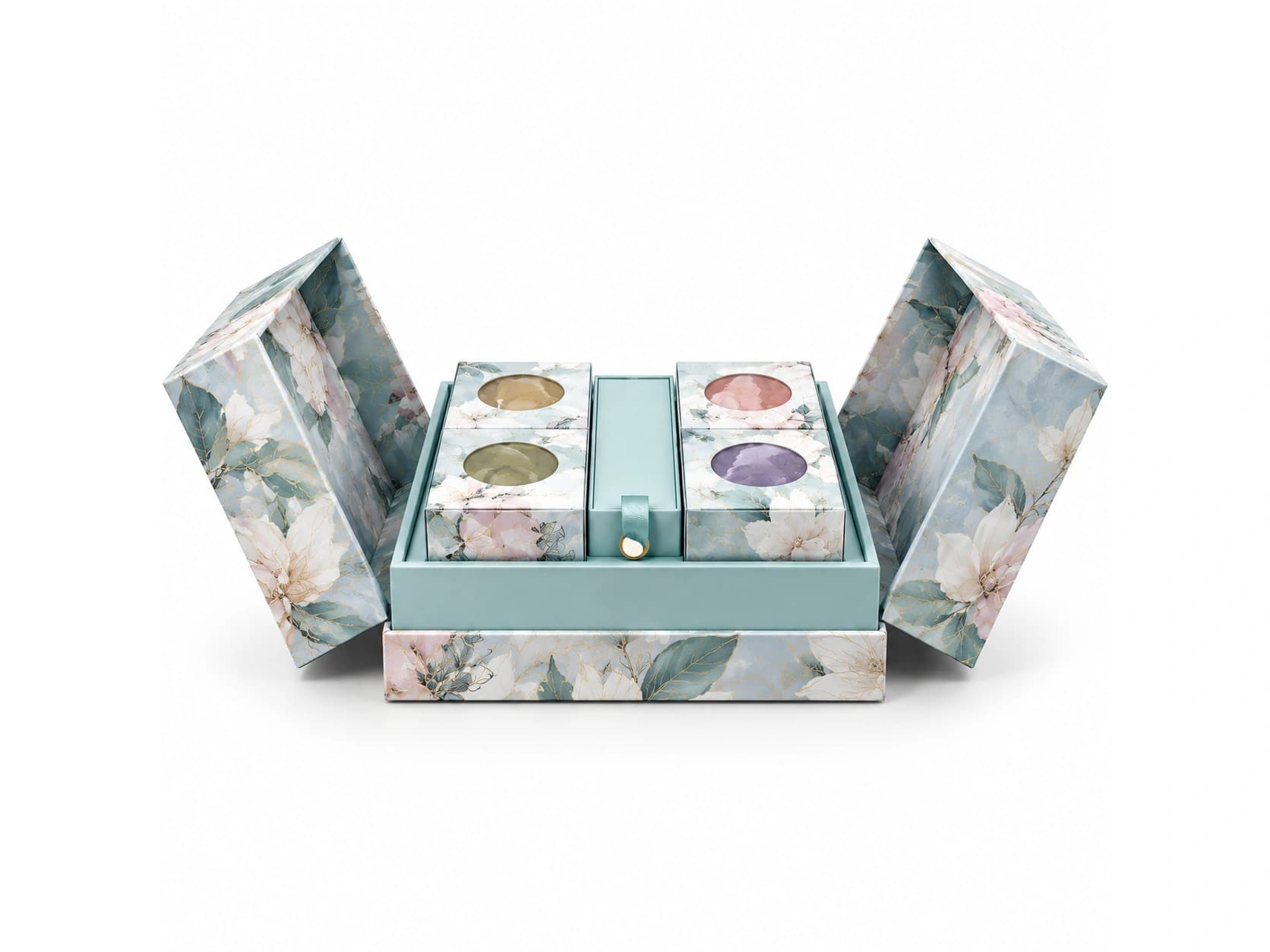
Four folded wings open around a raised central product area, extending the presentation beyond the square base in four directions.
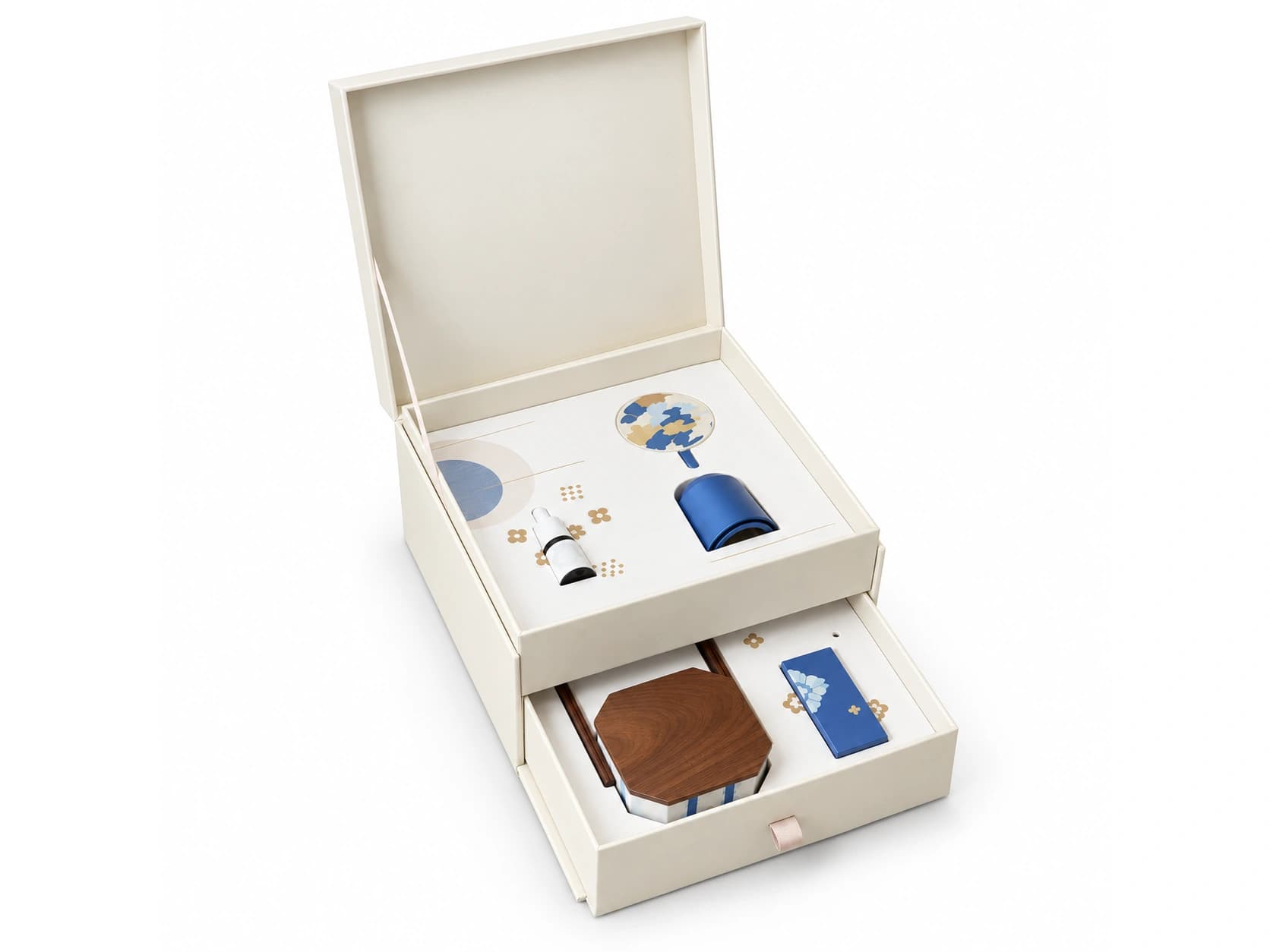
An upper hinged compartment opens above a separate ribbon-pull drawer, creating two independent levels for products of different sizes.
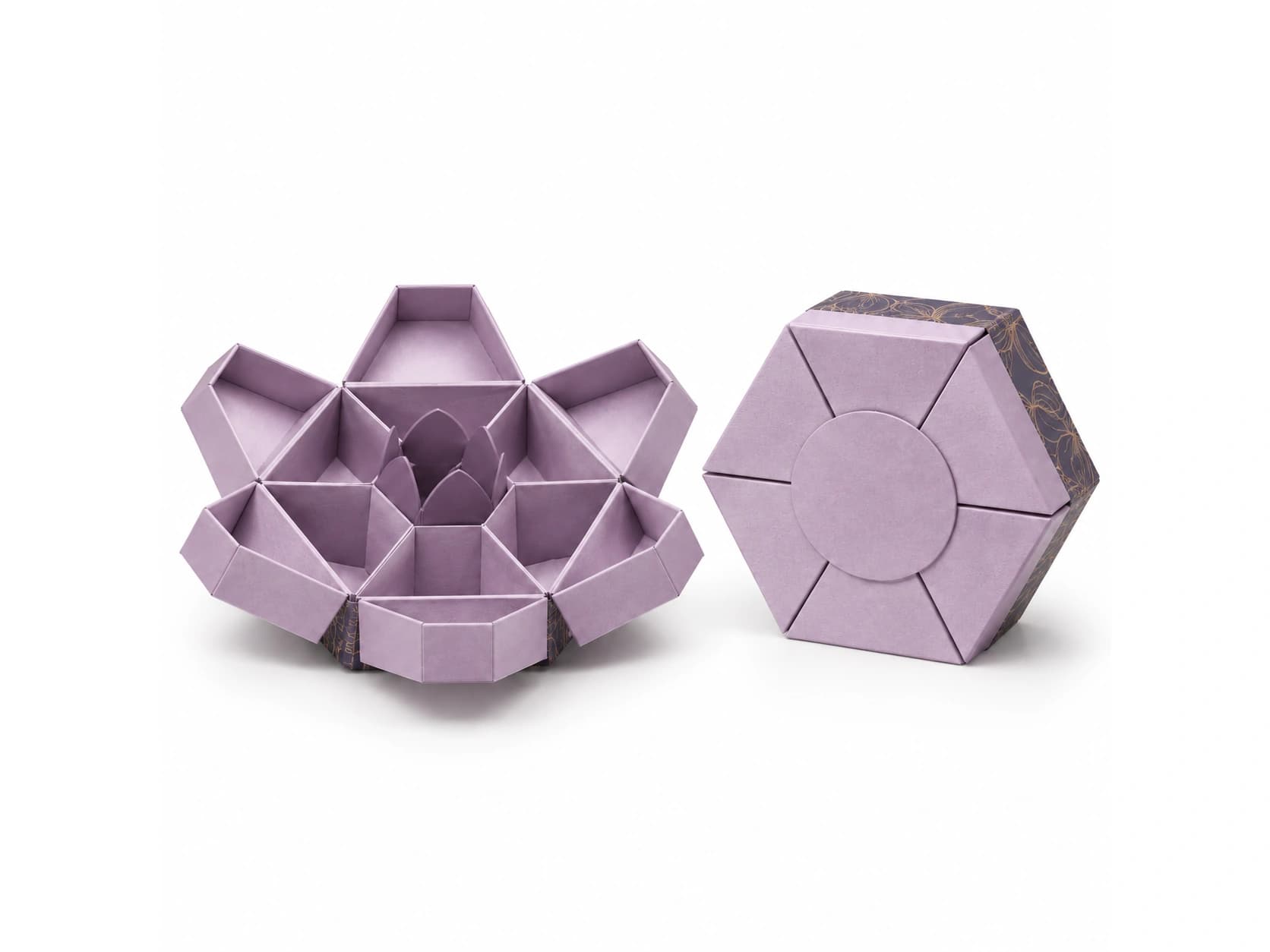
Six outer compartments unfold around a petal-shaped centre, transforming the closed hexagonal form into a broad radial display for small products.
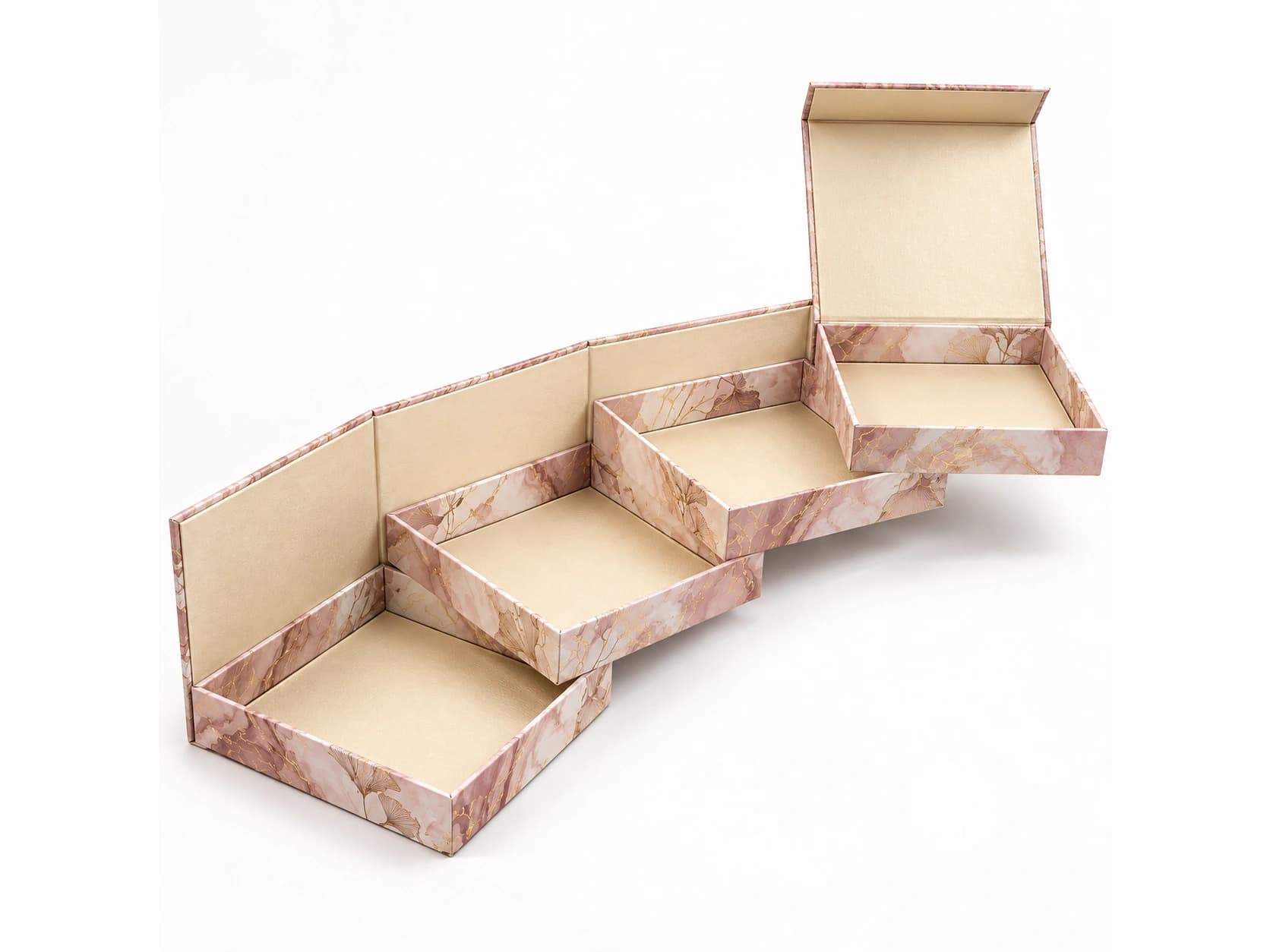
Four shallow rectangular trays unfold in sequence, creating an extended stepped presentation for separating and displaying multiple products.
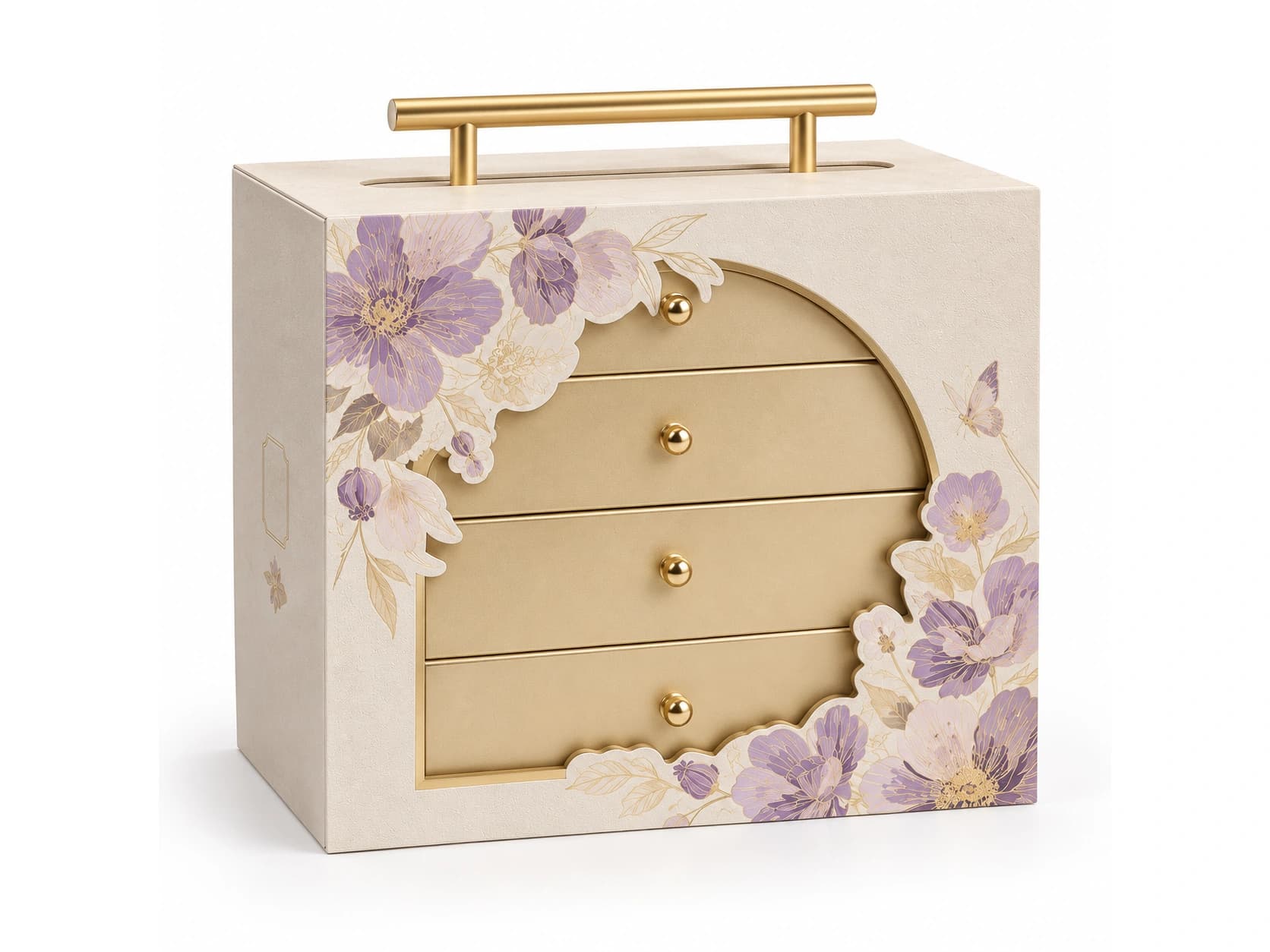
A handled outer case organizes multiple inner drawers or compartments, combining separated product storage with a cabinet-style presentation.
With the two side panels closed, five small inner cartons lie parallel within the box. Opening the side panels activates a linked mechanism that raises all five cartons into a more prominent display position.
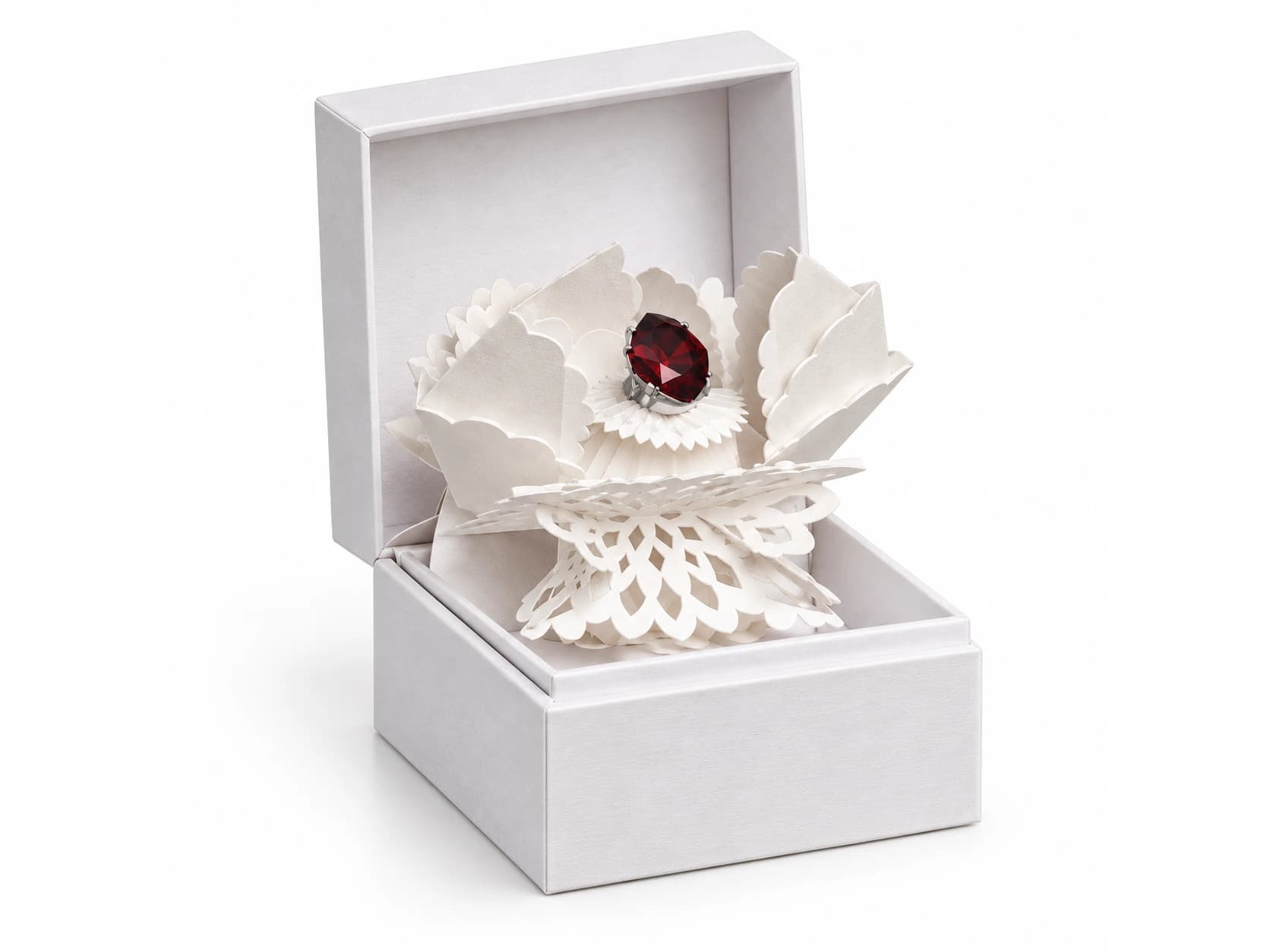
Opening the box activates a linked structure that raises the petal-shaped panels around the central product area, creating a three-dimensional floral display.
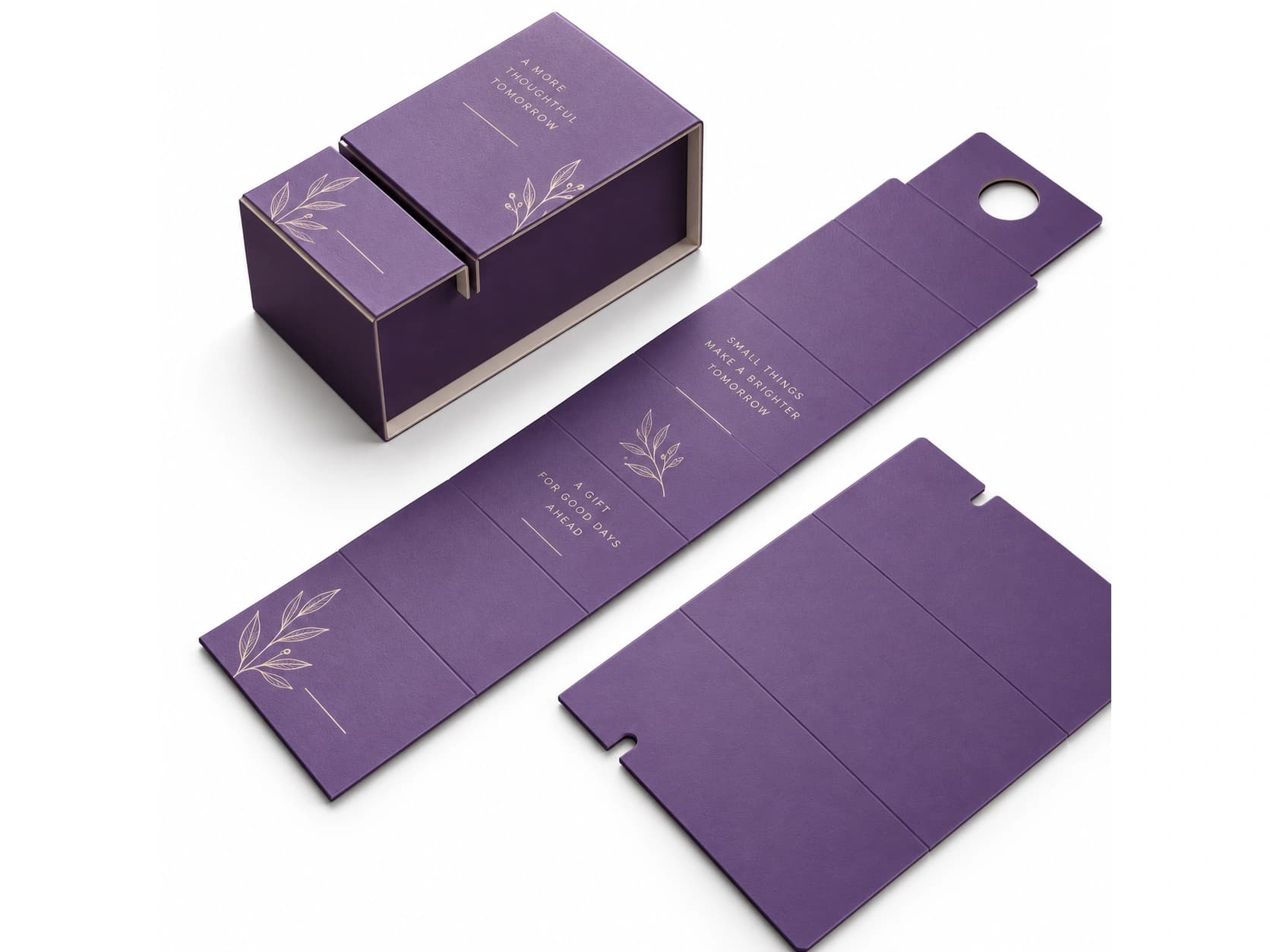
Two separate board components interlock through a tab-and-slot structure to form the presentation box without glue, while remaining flat before assembly.
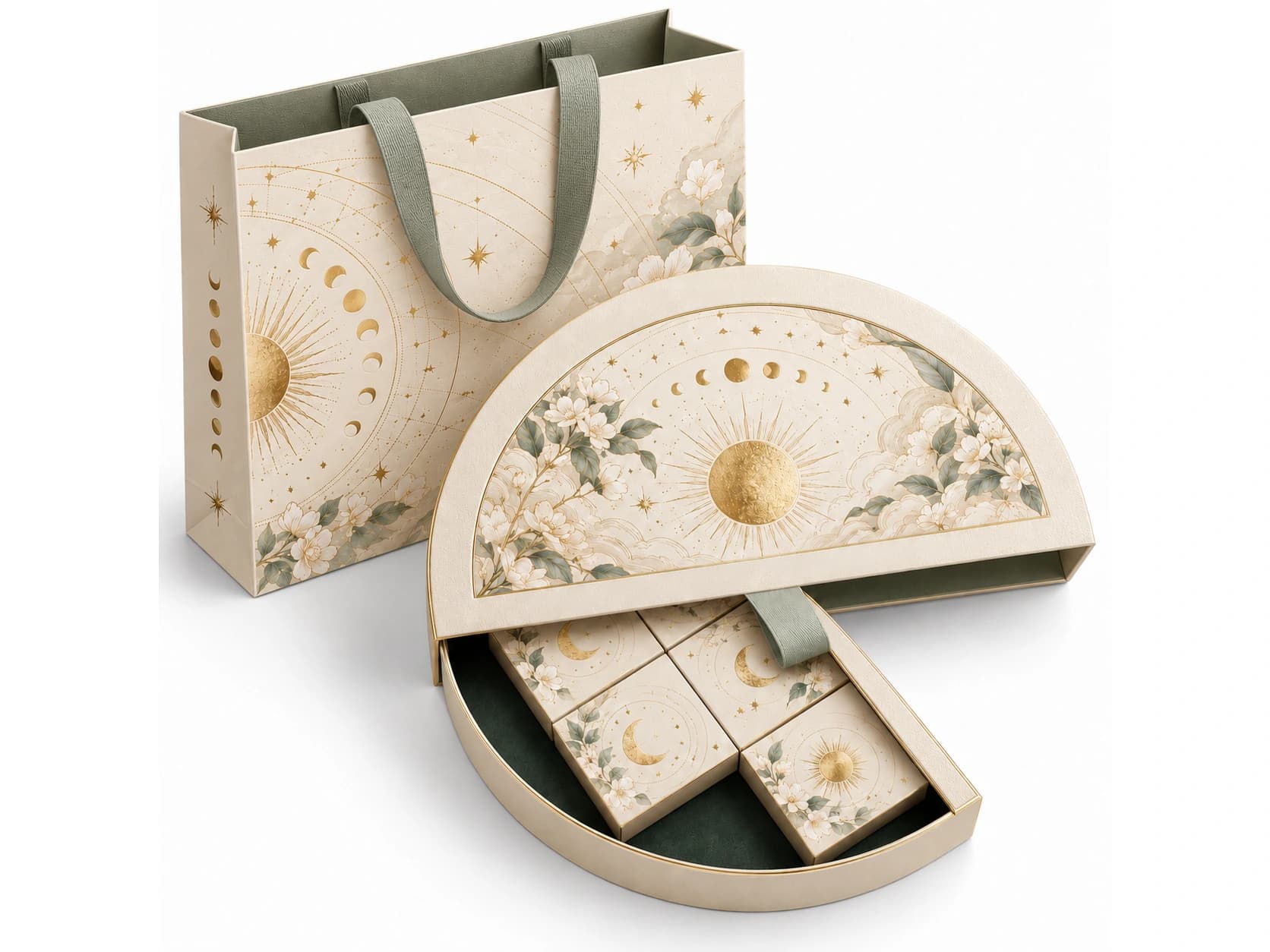
Five independent small boxes rotate outward into a fan-shaped arrangement, separating the products while creating a layered interactive presentation.
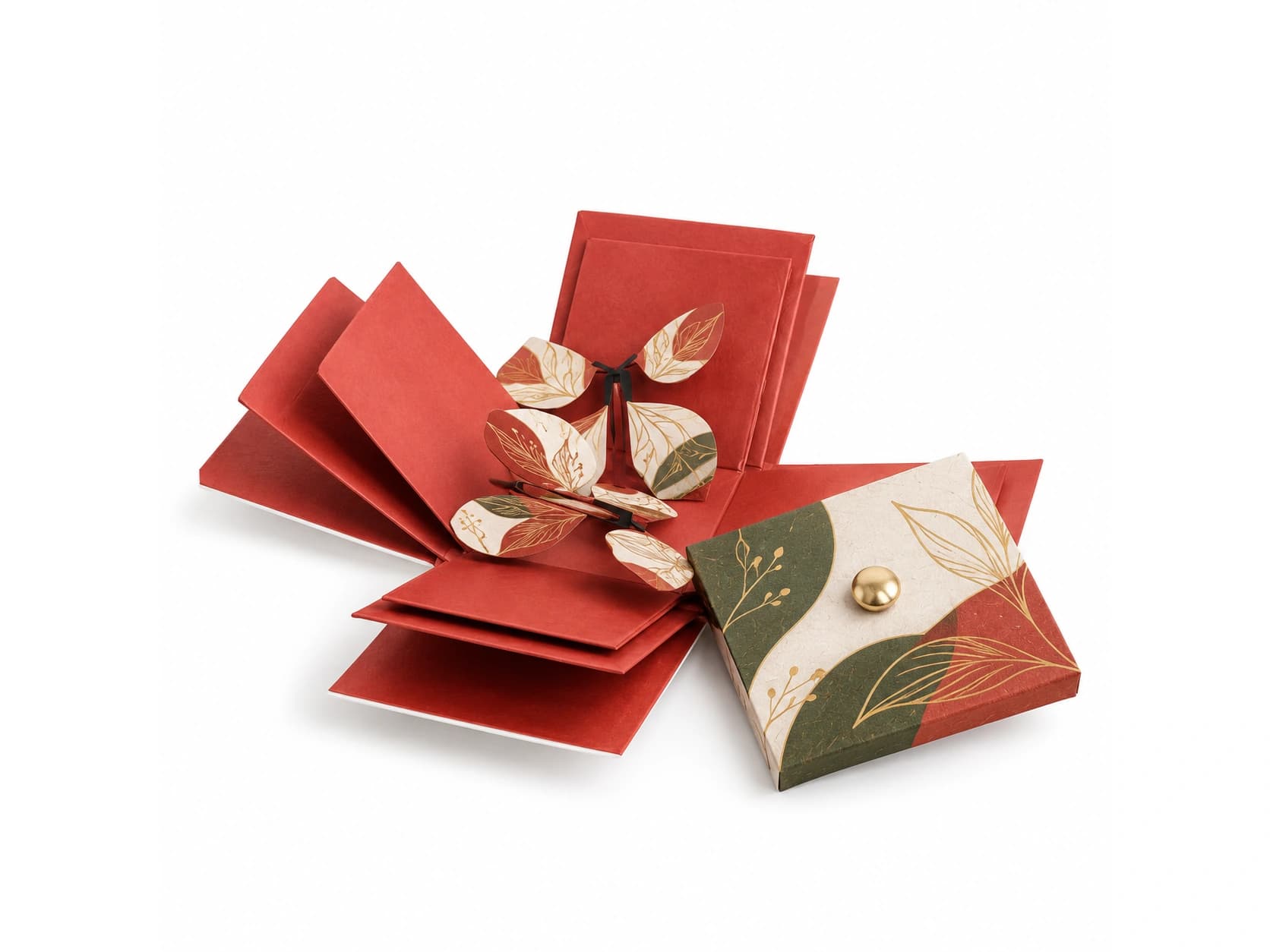
Connected folding panels open in sequence like an accordion, extending the compact closed form into a wider multi-panel presentation.
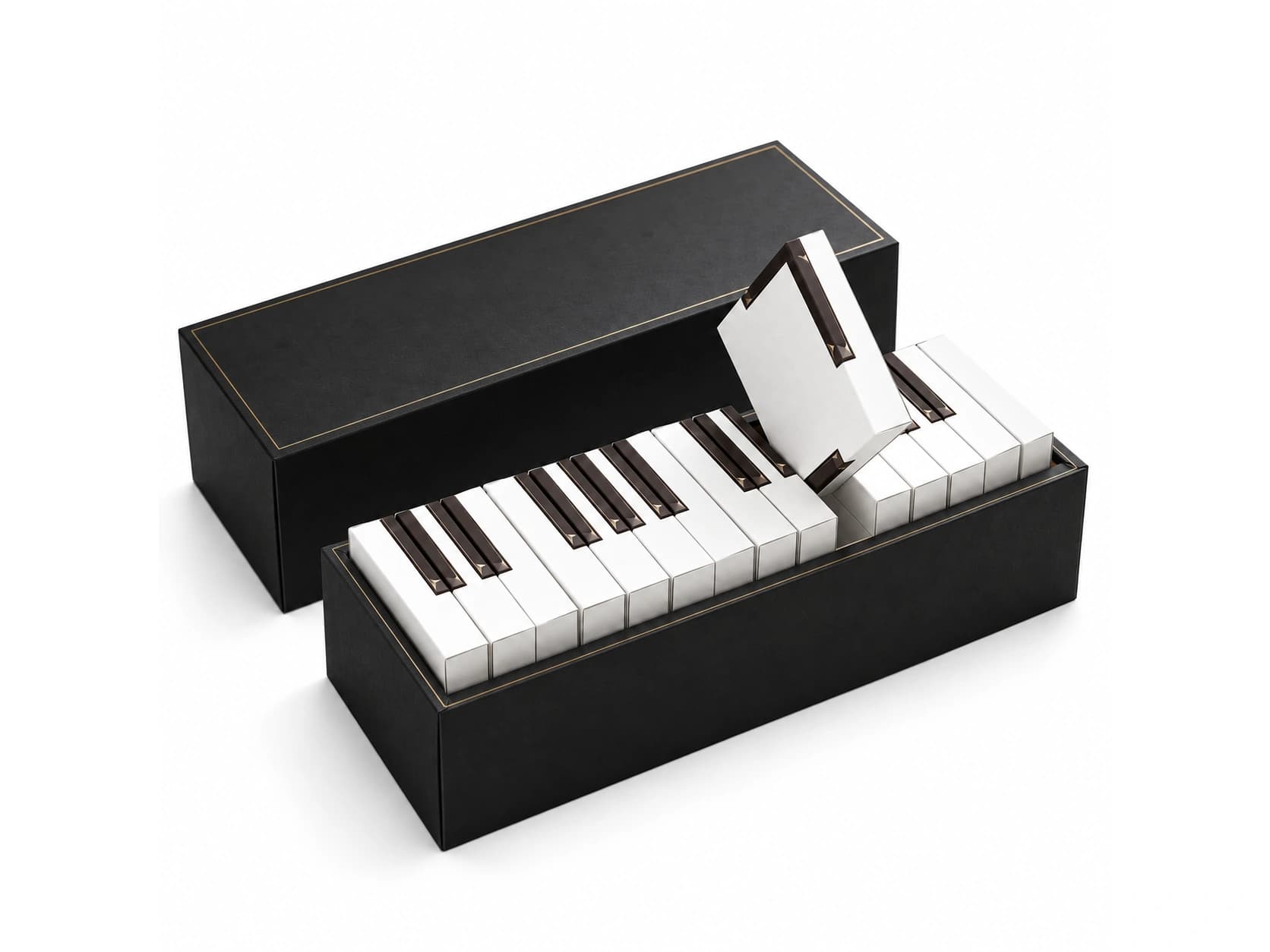
A classic lid-and-base rigid box is reinterpreted with piano-inspired proportions and styling, using familiar construction to create a distinctive themed presentation.
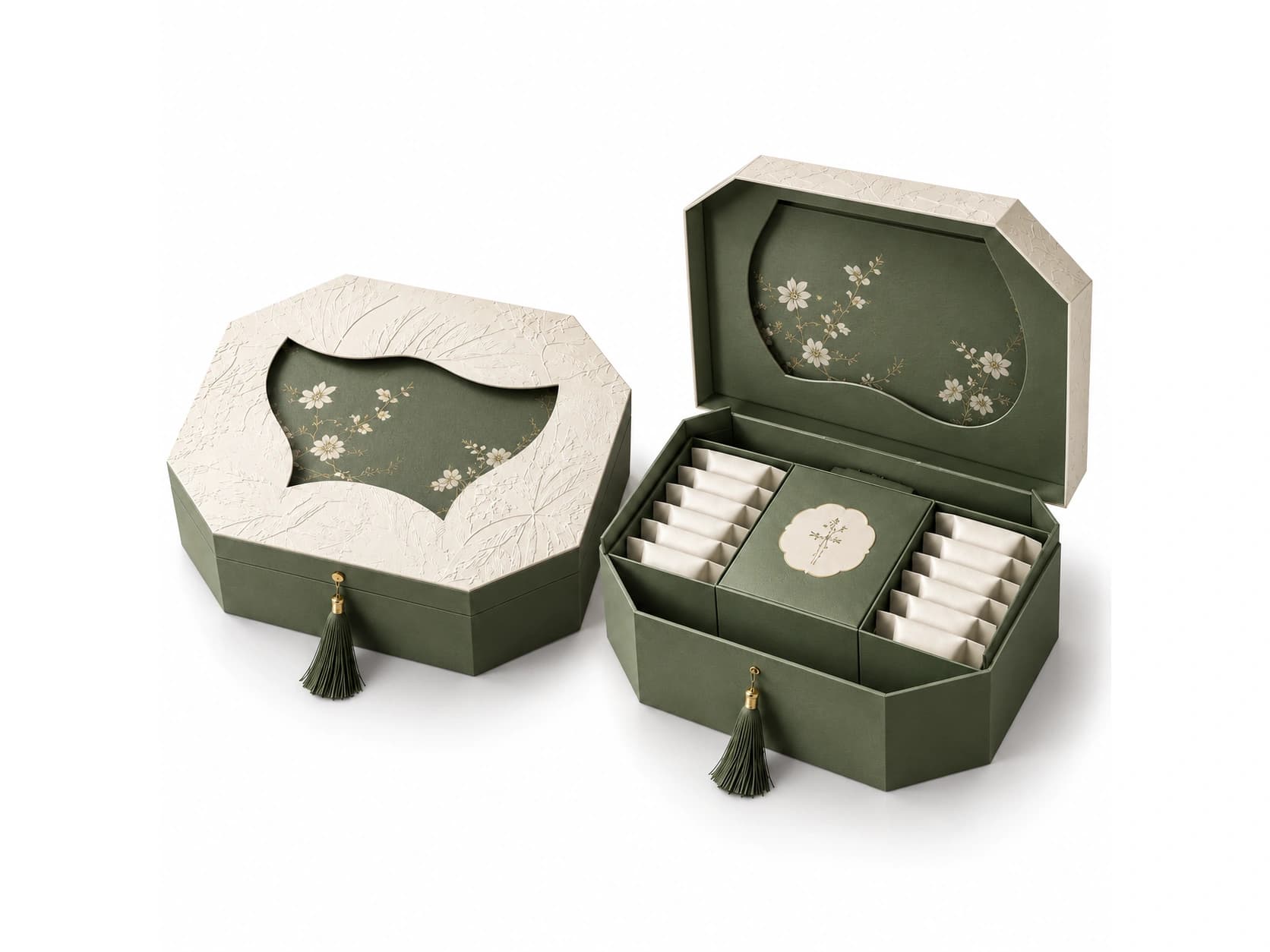
A hinged presentation box uses angular faceted surfaces to create a more sculptural exterior while retaining a straightforward hinged opening.
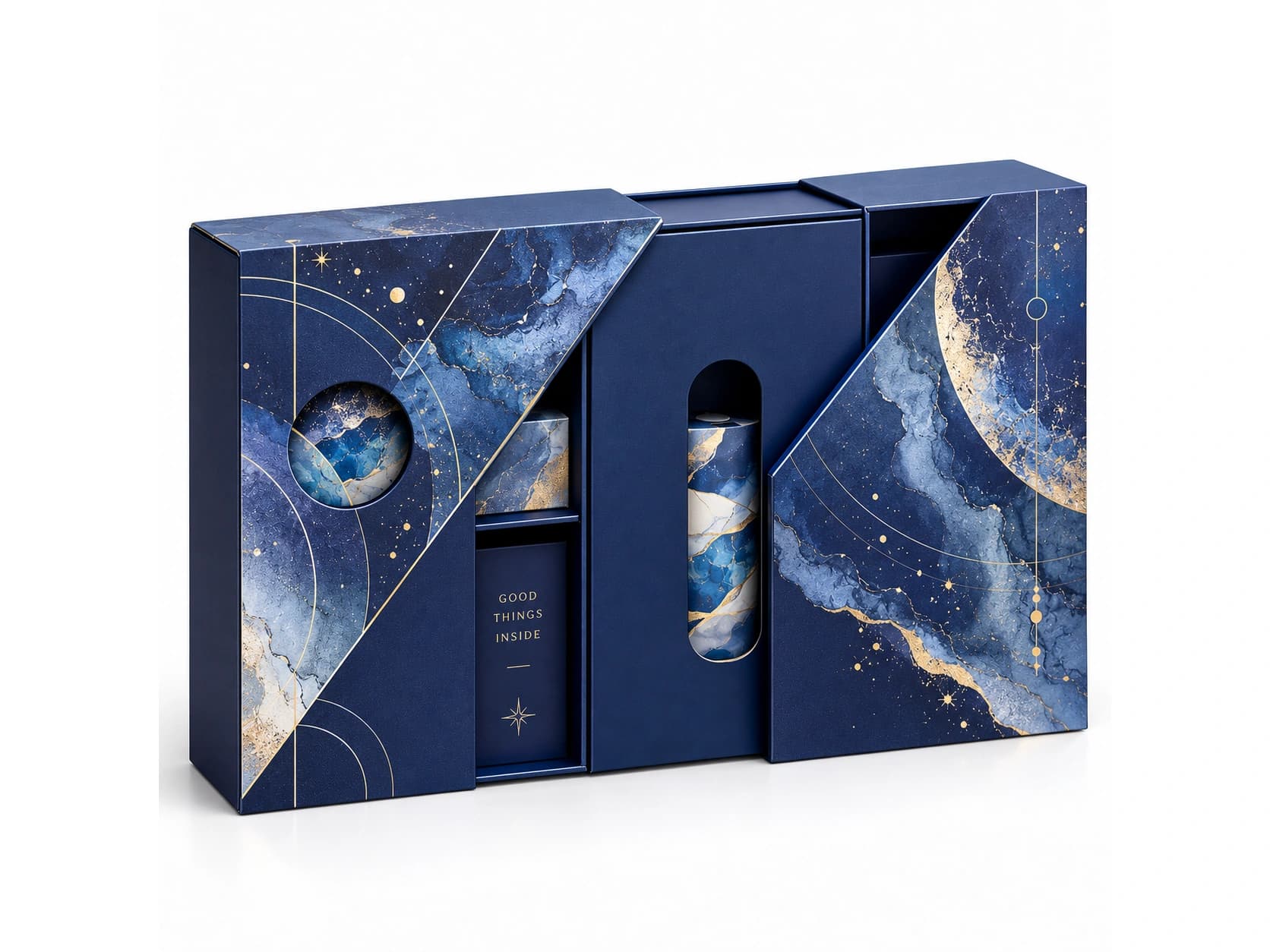
Two outer sections pull apart to the left and right, revealing the central inner box and product presentation inside.
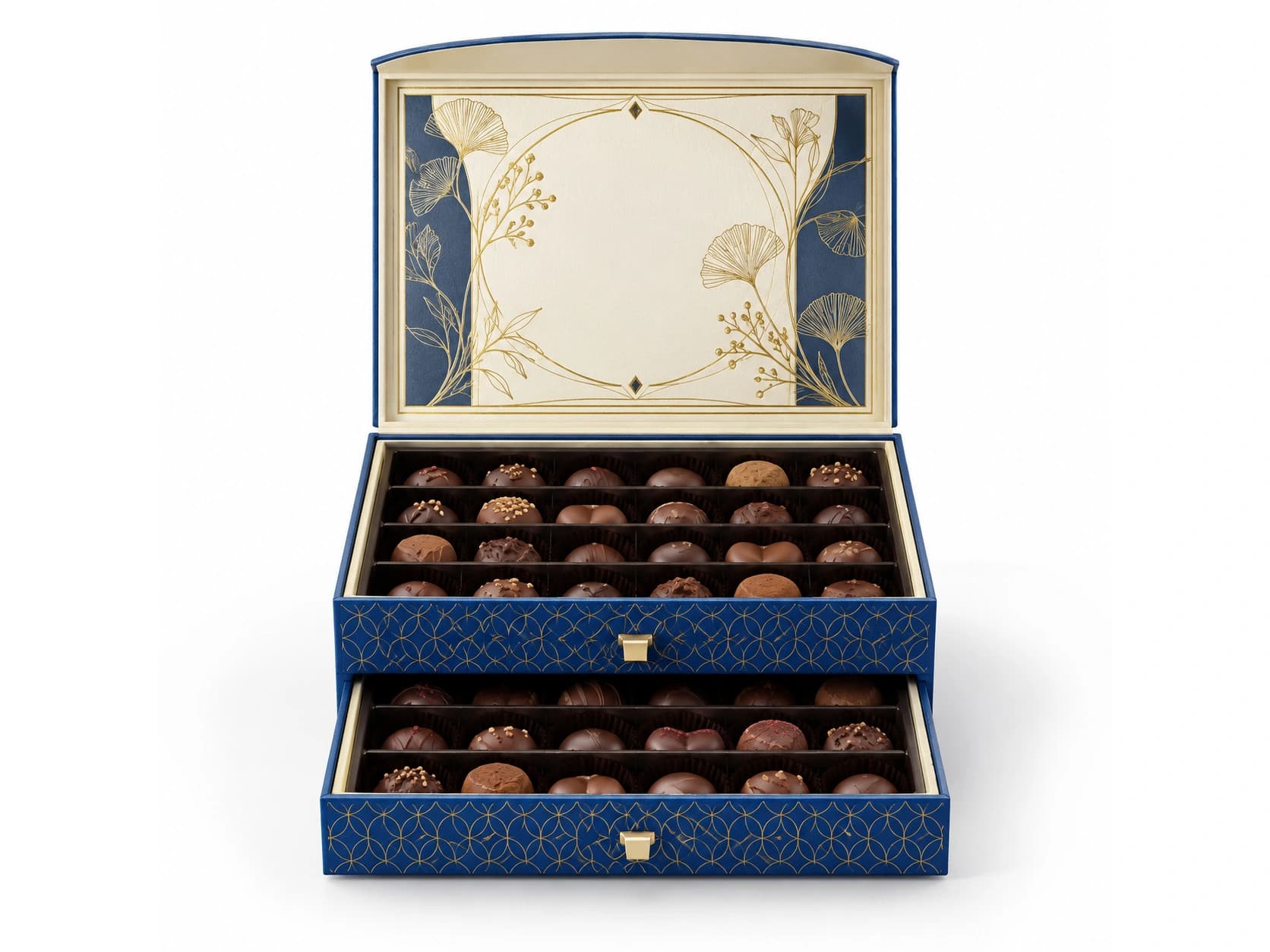
The upper compartment opens with a hinged lid, while the lower compartment pulls out as a separate drawer, creating two distinct presentation levels.
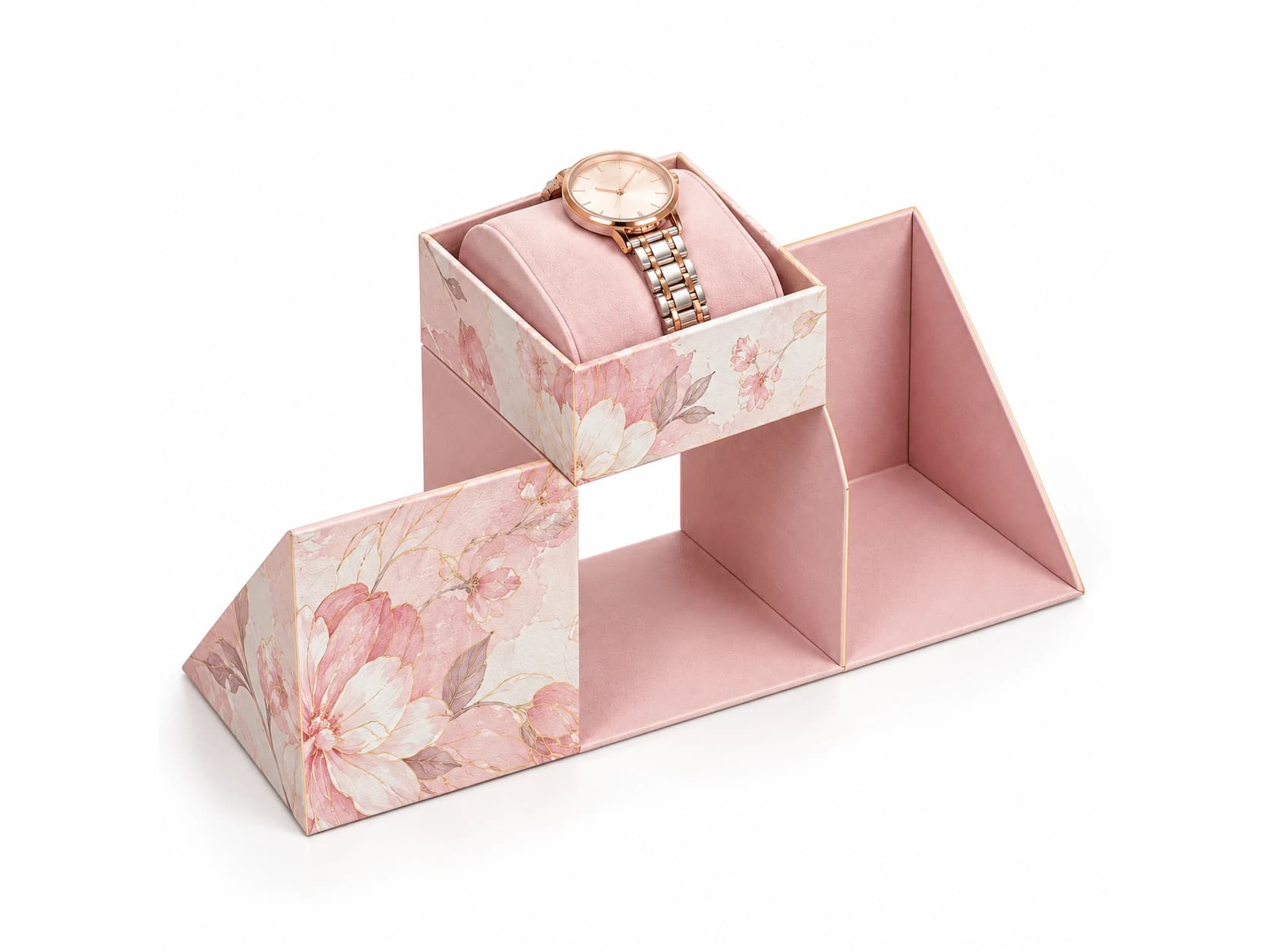
As the lid opens, an internal linked mechanism raises the central product platform into a more prominent display position.
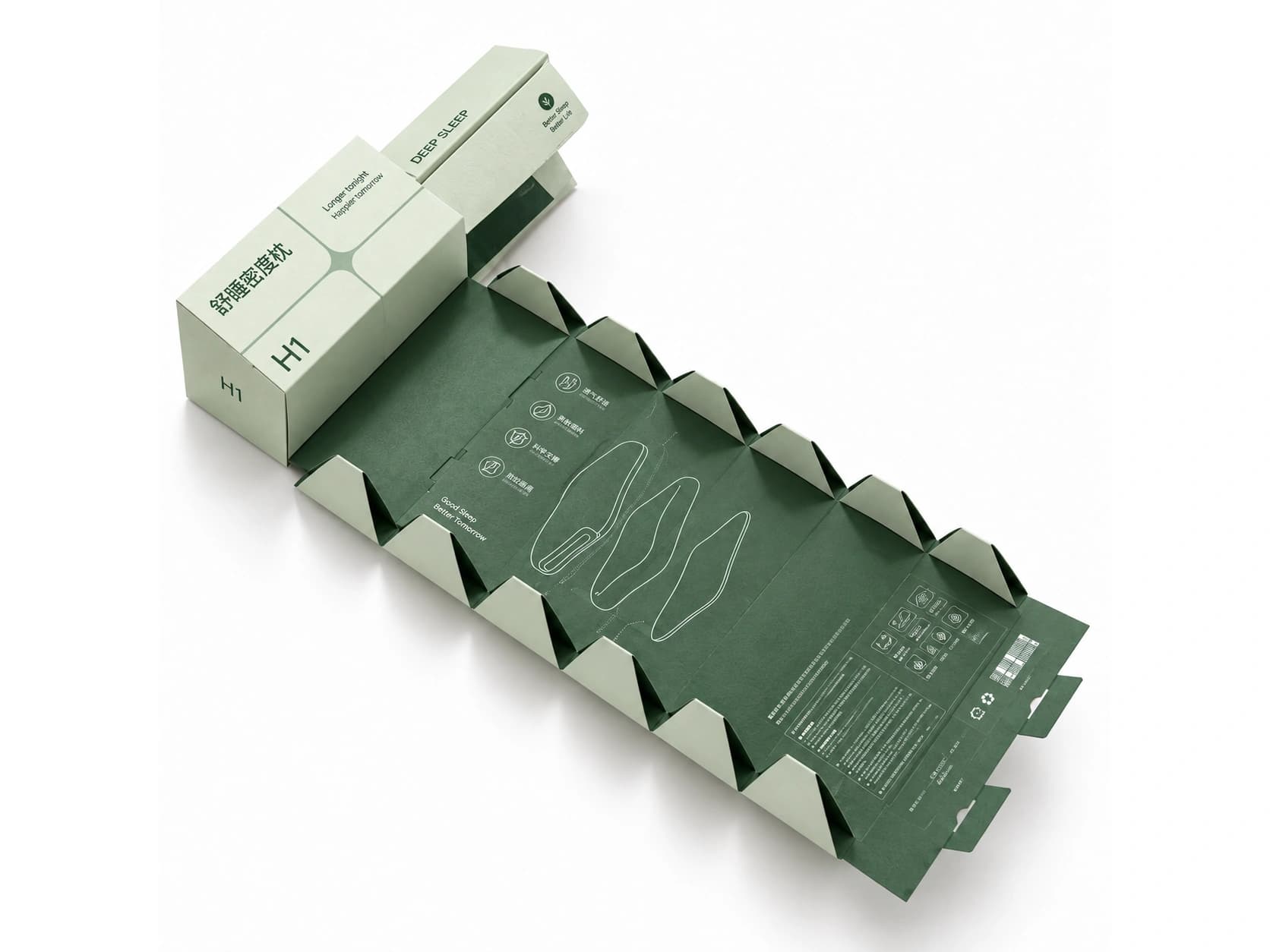
A long-format carton designed to ship flat and be opened or assembled into its final three-dimensional form before use.
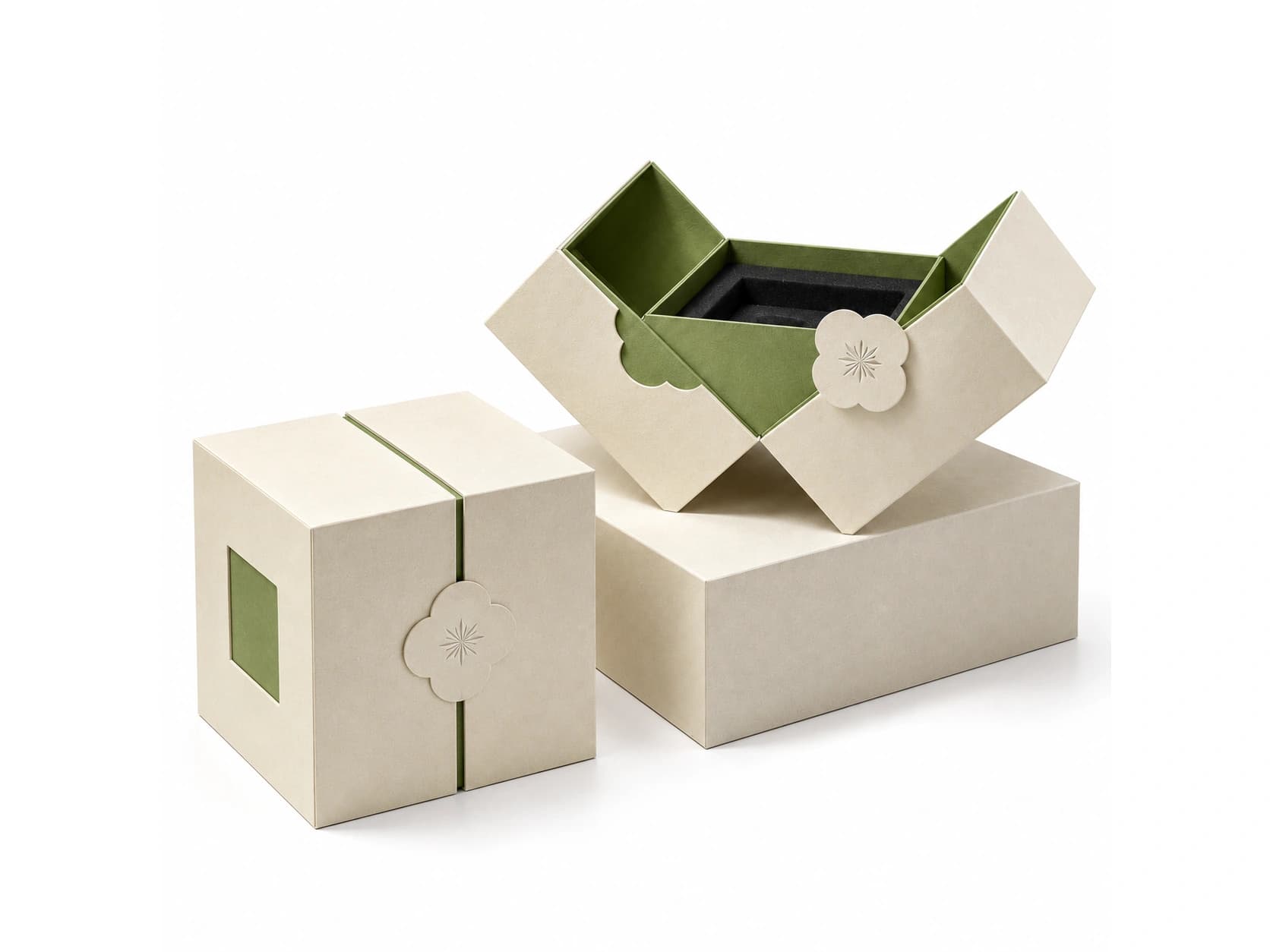
Two hinged front panels open outward from the centre to reveal the product display inside.
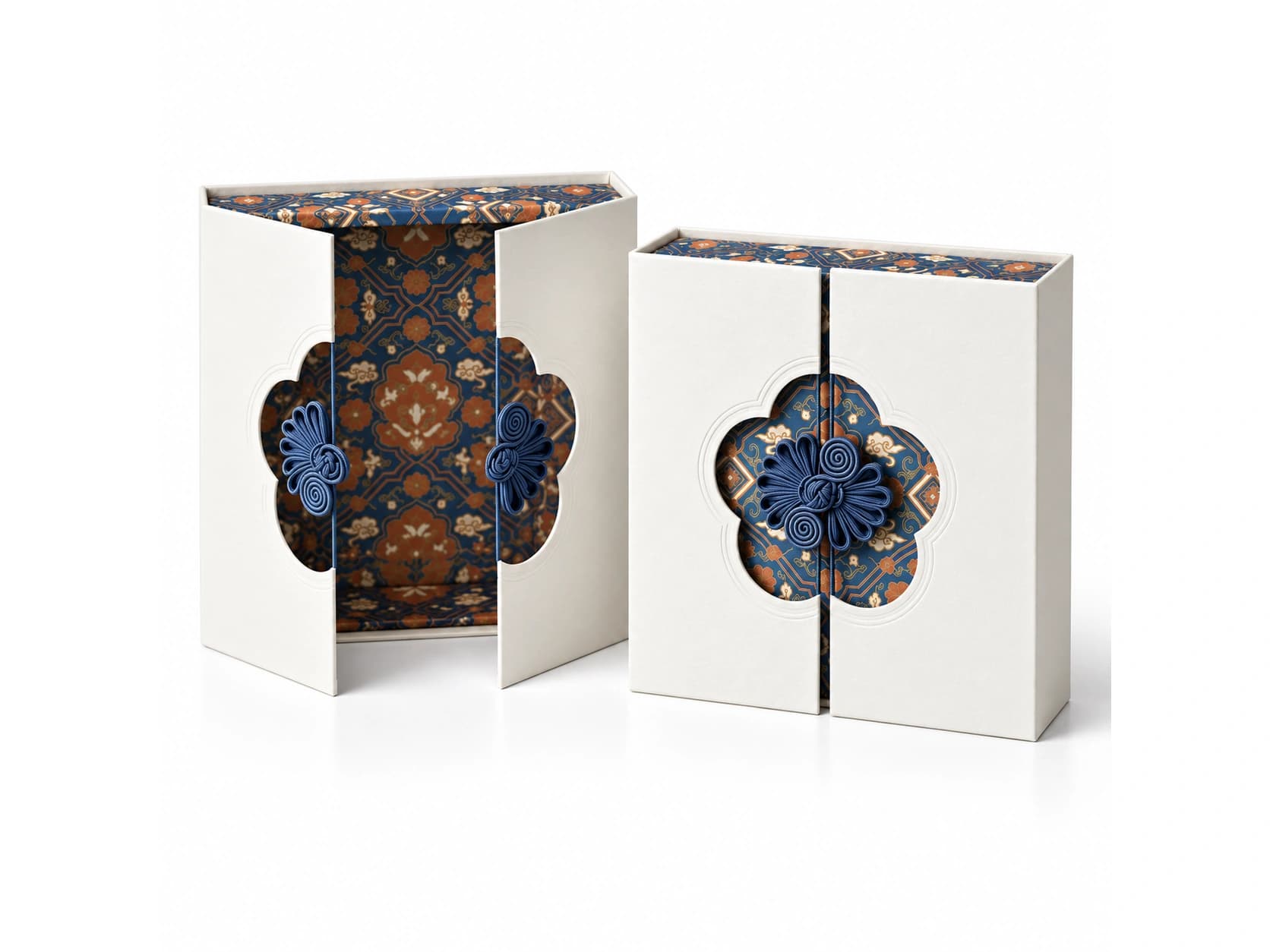
Two hinged front panels open outward from the centre, while concealed magnets embedded in the board hold the doors closed when brought together. The central medallion is decorative only.
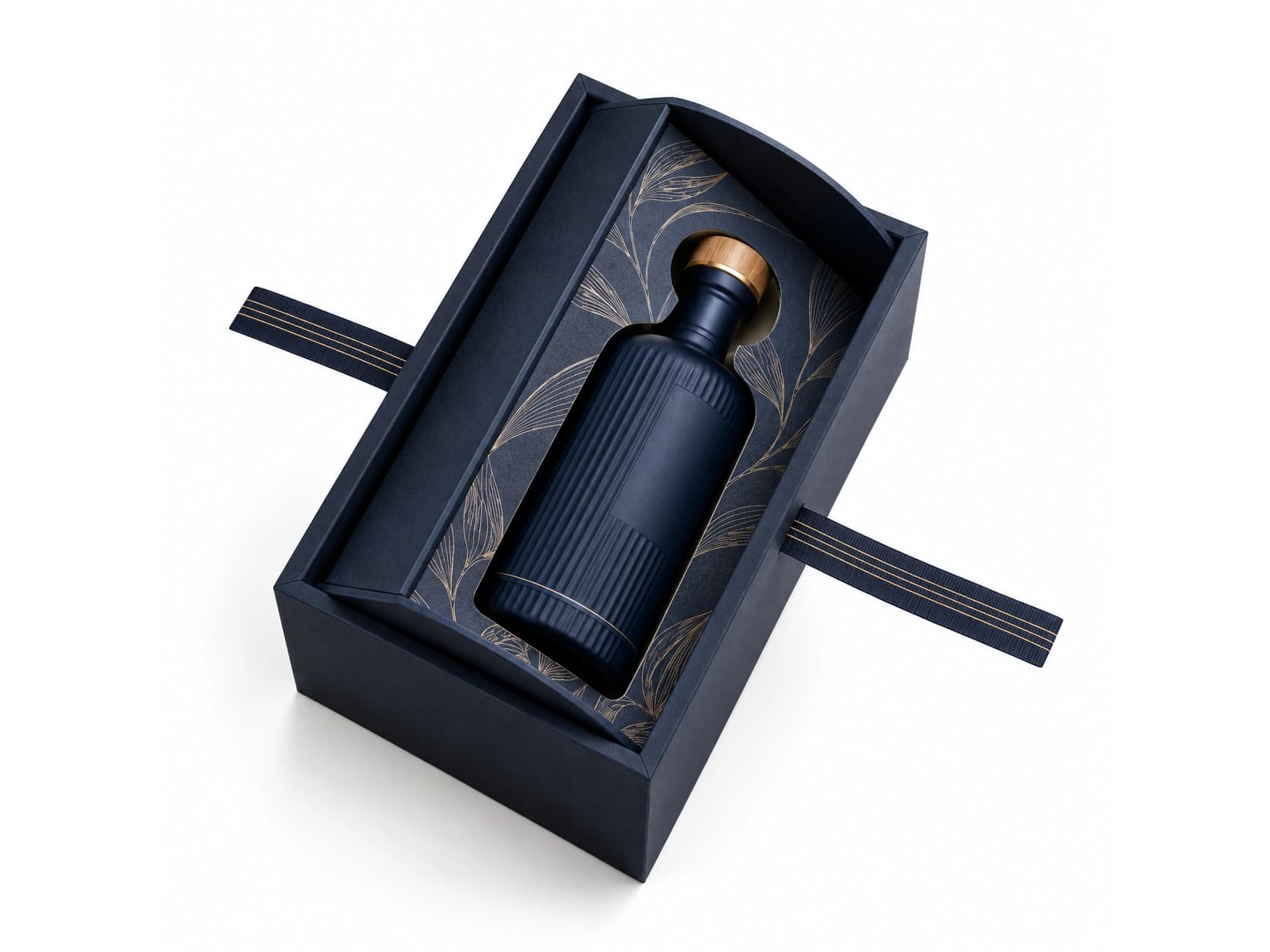
Pulling the ribbon activates an internal linked mechanism that rotates and flips the inner presentation section to reveal the product.
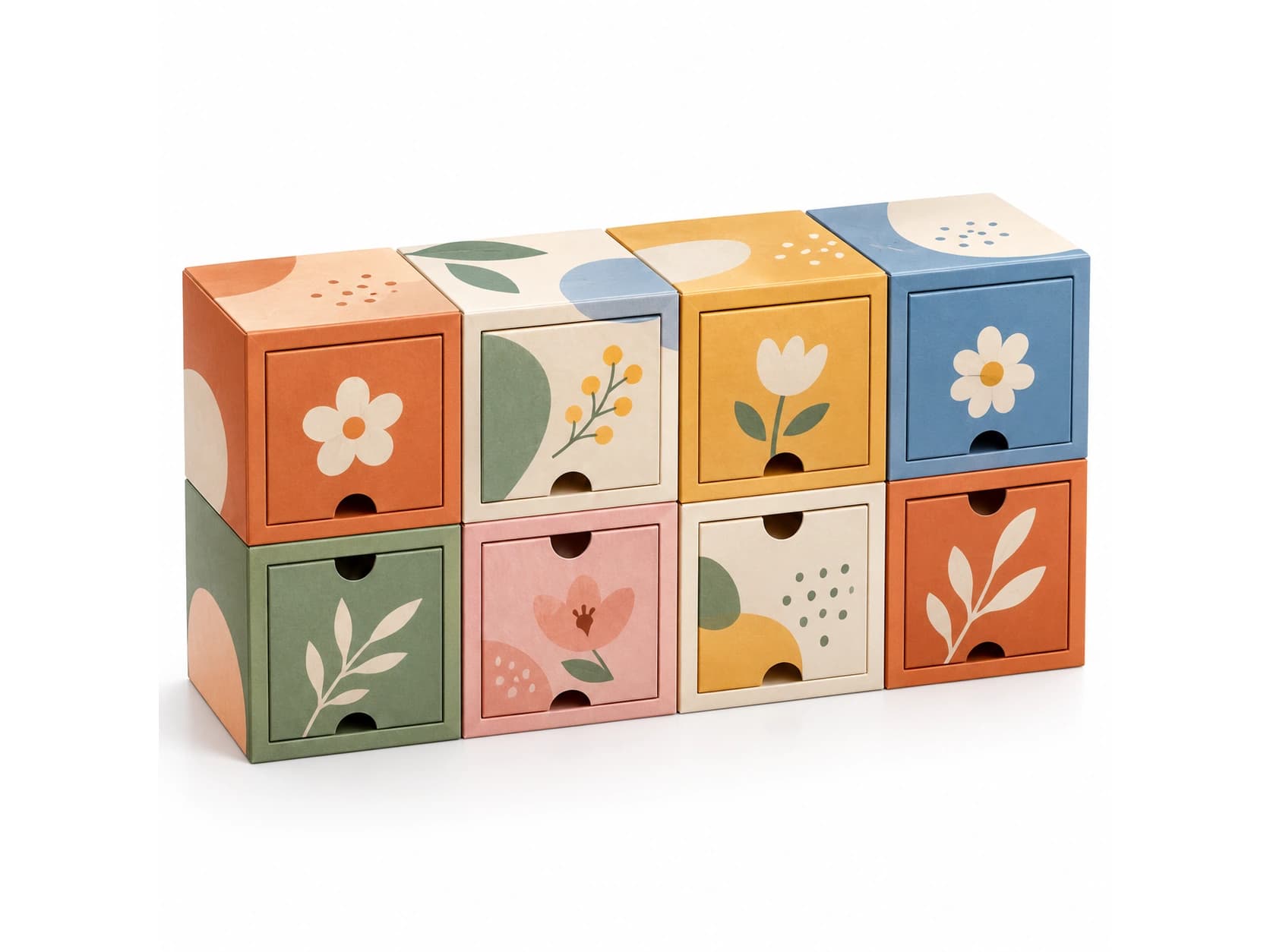
Eight connected box units form a continuously folding structure that can be flipped through different configurations, revealing different outer faces and graphic layouts as it moves.
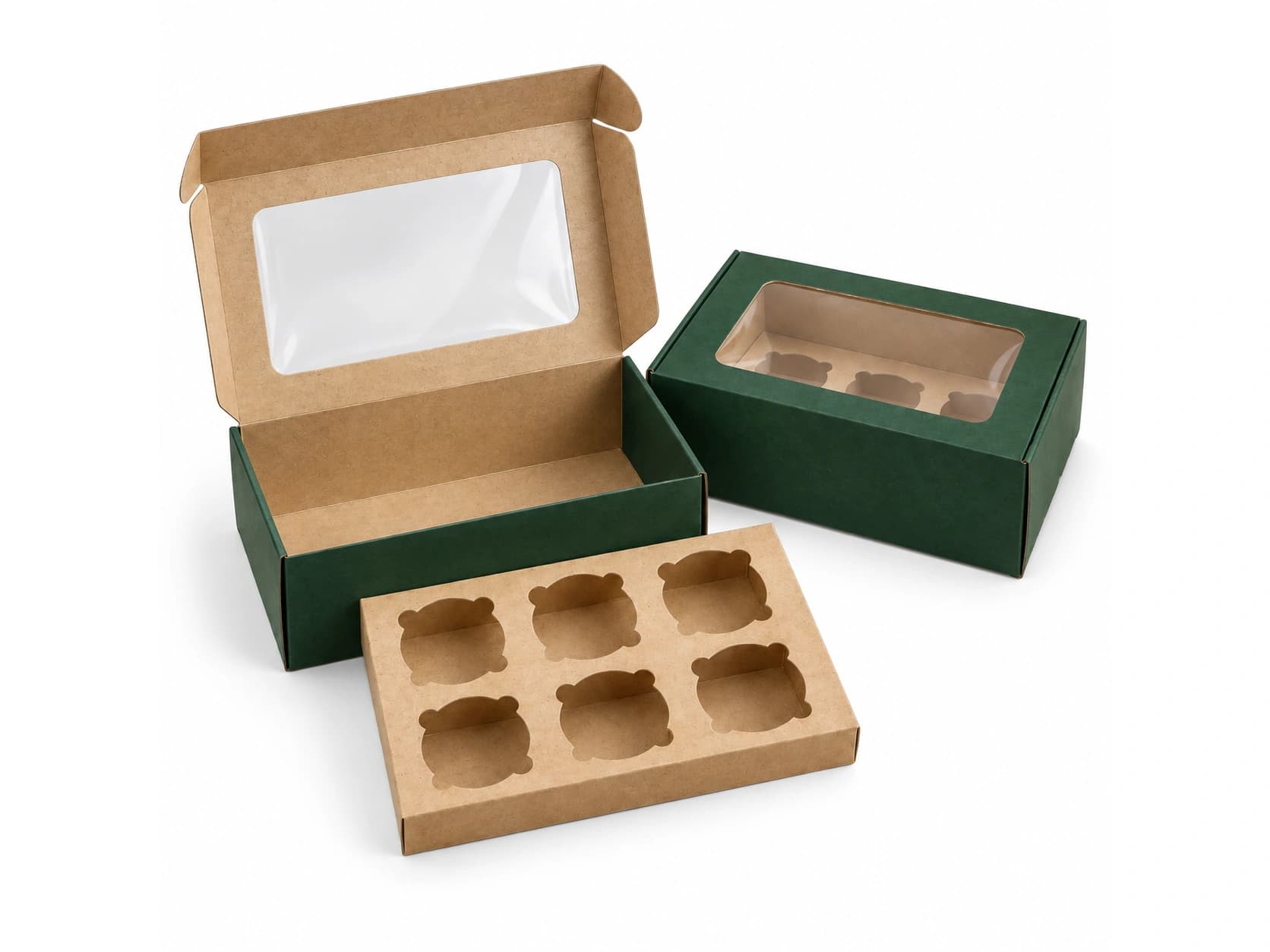
A kraft paperboard carton with a die-cut window backed by clear PET film. The carton ships flat and is folded into its final form before packing.
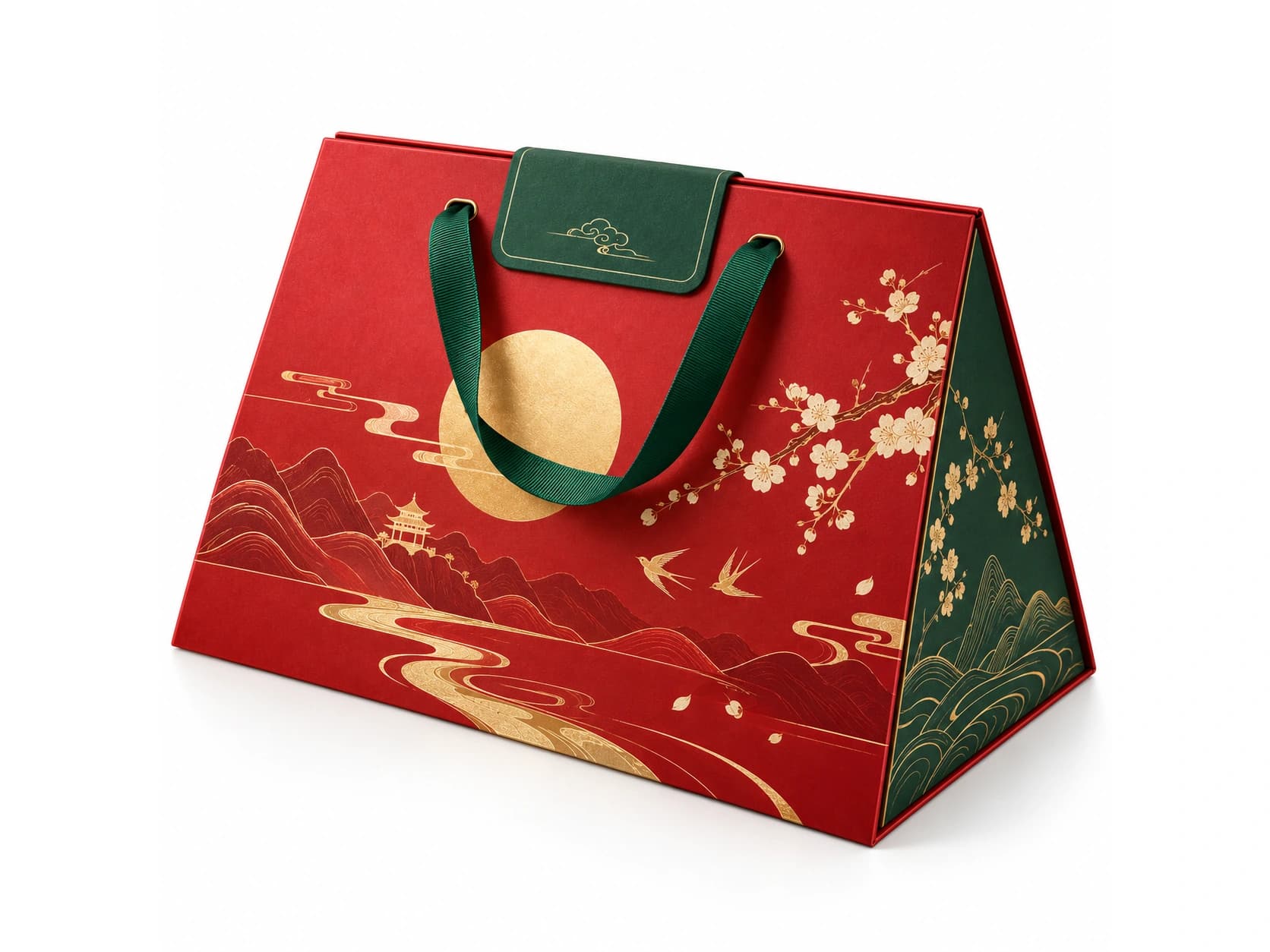
A triangular paperboard carton designed to ship flat and fold into its three-dimensional form before packing.

As the book-style cover opens, a linked internal mechanism tilts the inner tray upward, presenting the product at a more visible display angle.
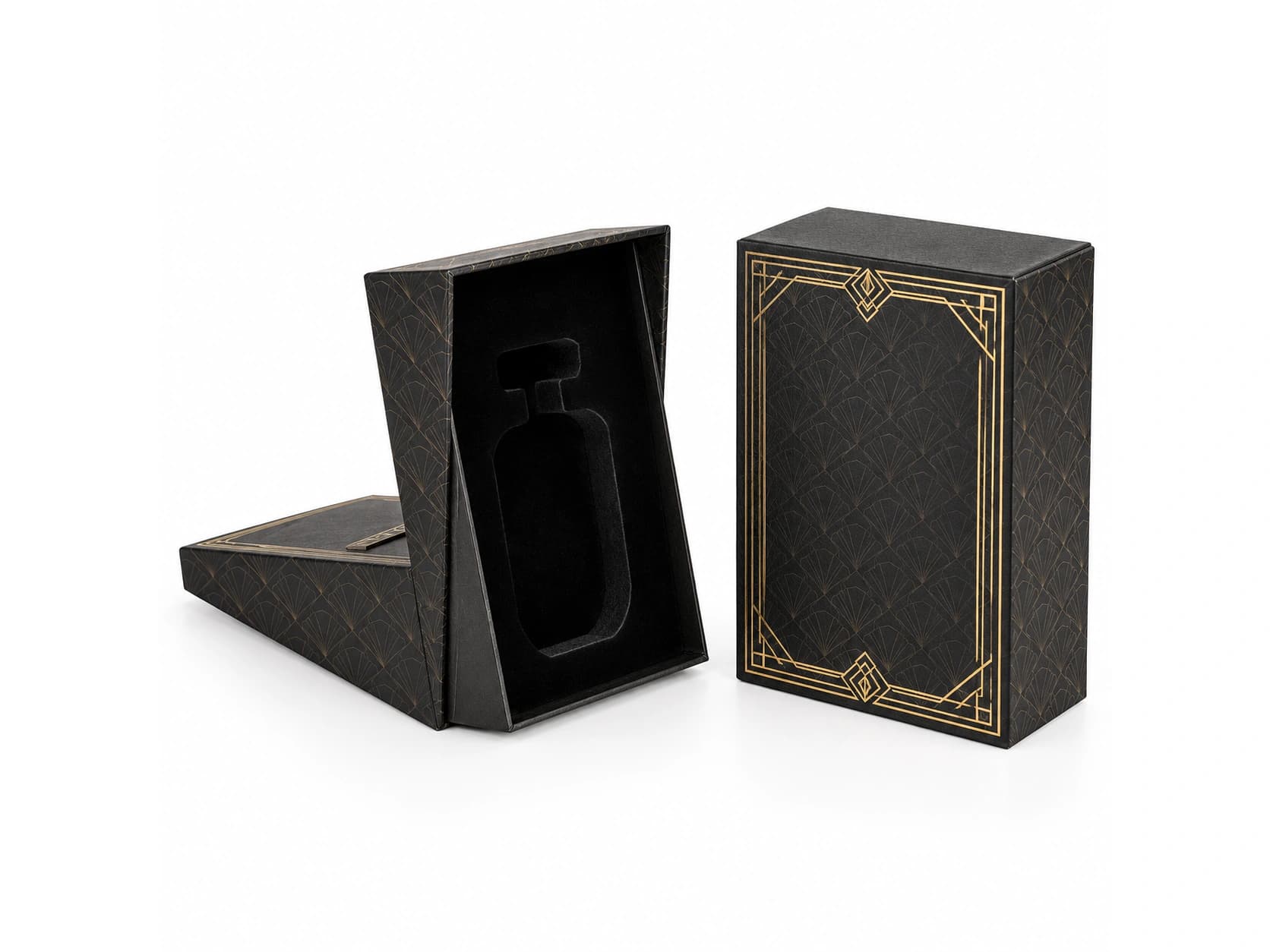
A hinged presentation box engineered to stand upright when opened, allowing the packaging itself to function as a display stand for the product.
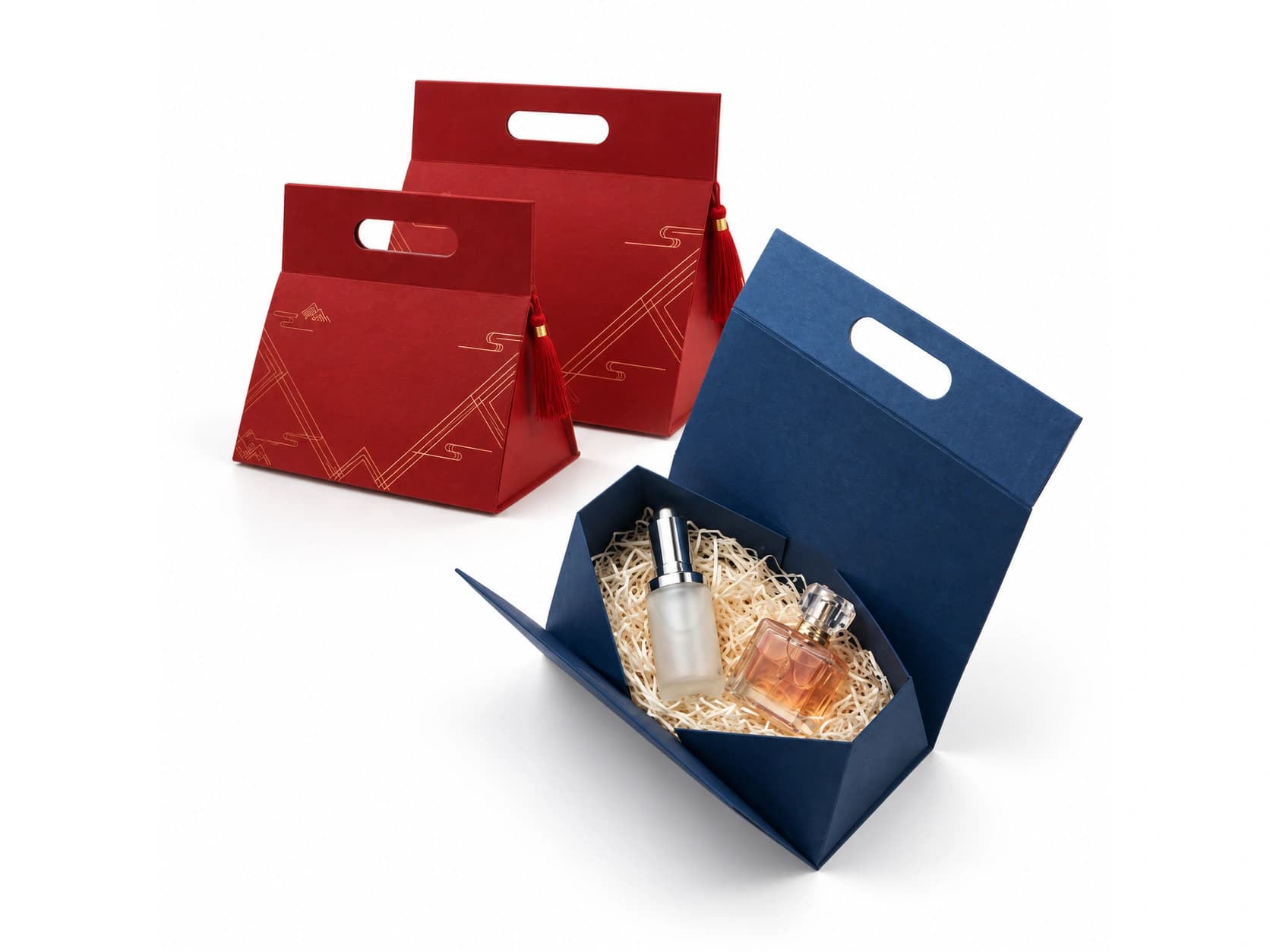
A folding paperboard carton with an integrated top handle formed from the carton itself. It ships flat and is assembled into its final carrying form before packing.

A three-part flat-pack packaging system with a triangular outer carton containing a folding paperboard insert for the main product and a separate double-tuck carton for sachets, instructions or accessories. All three components can ship flat and are assembled before final packing.
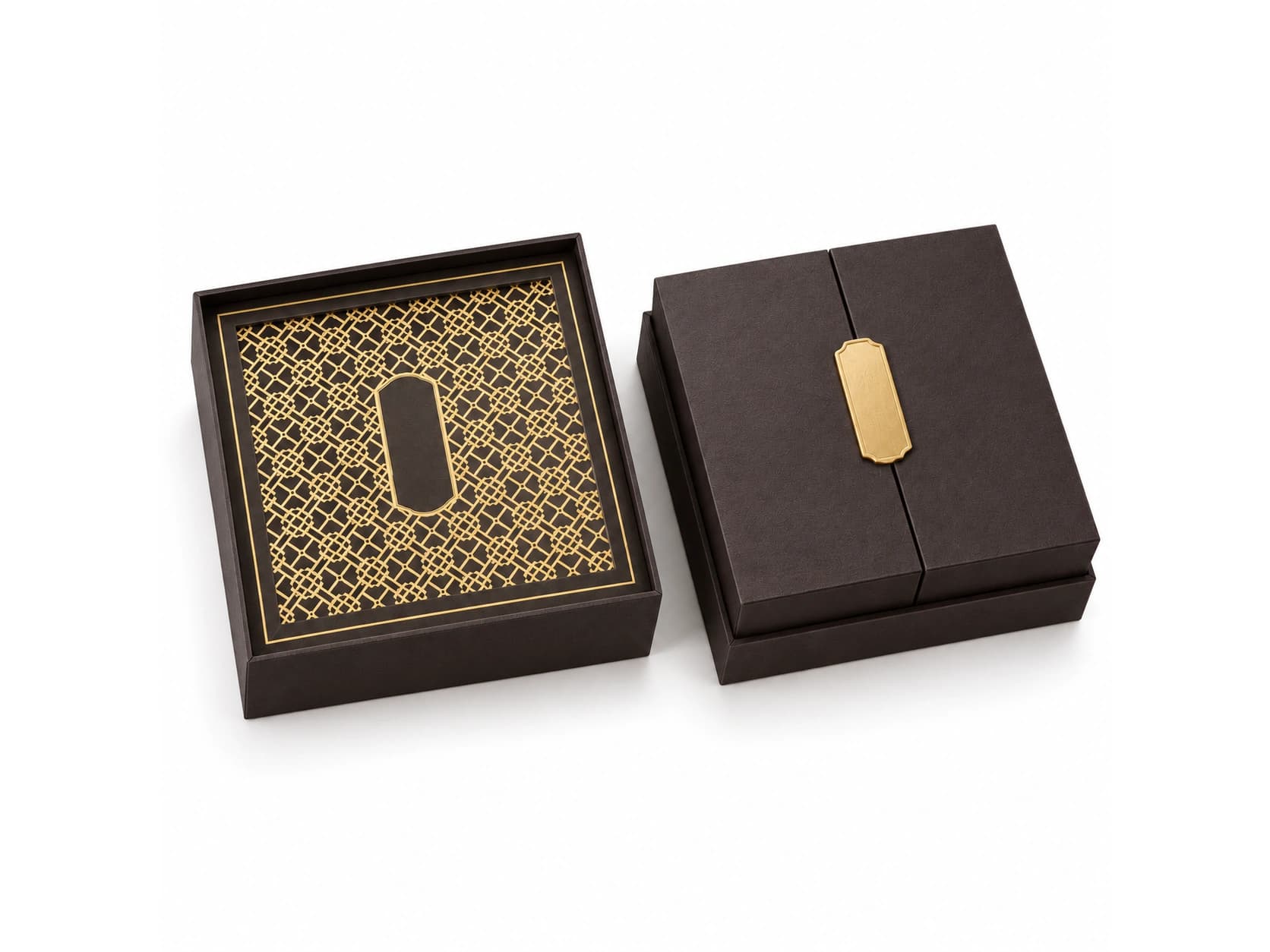
A lid-and-base outer box conceals a secondary pair of hinged doors inside. After the outer lid is removed, the two inner panels open outward to reveal the product display at the centre.

A brightly colored plastic carton designed to ship flat and fold into its final three-dimensional form before packing. A decorative ribbon adds a gift-oriented finish without serving as the primary closure.
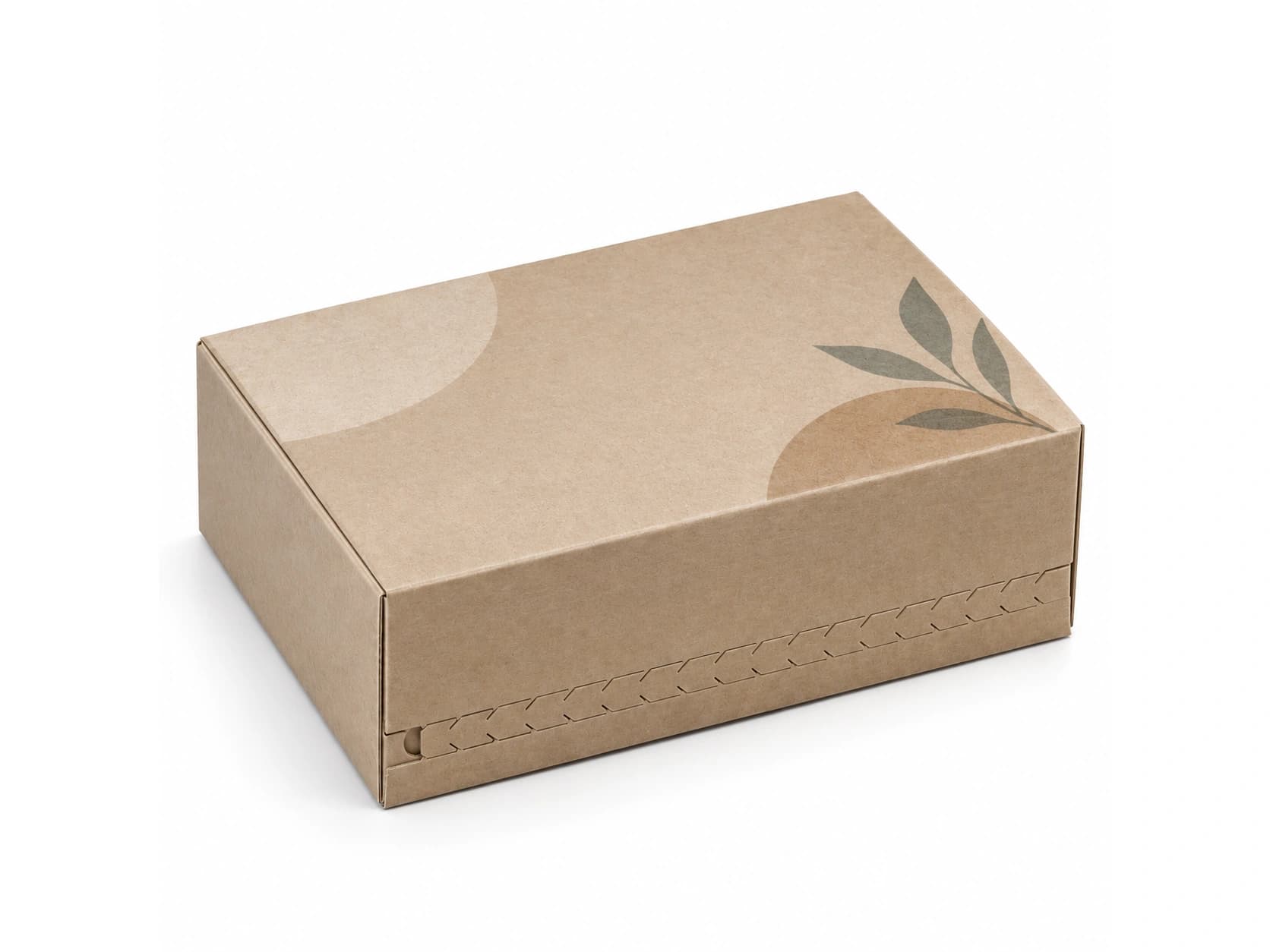
A folding carton with a perforated tear strip integrated into the structure. The strip is torn along the preset line to open the package for the first time.
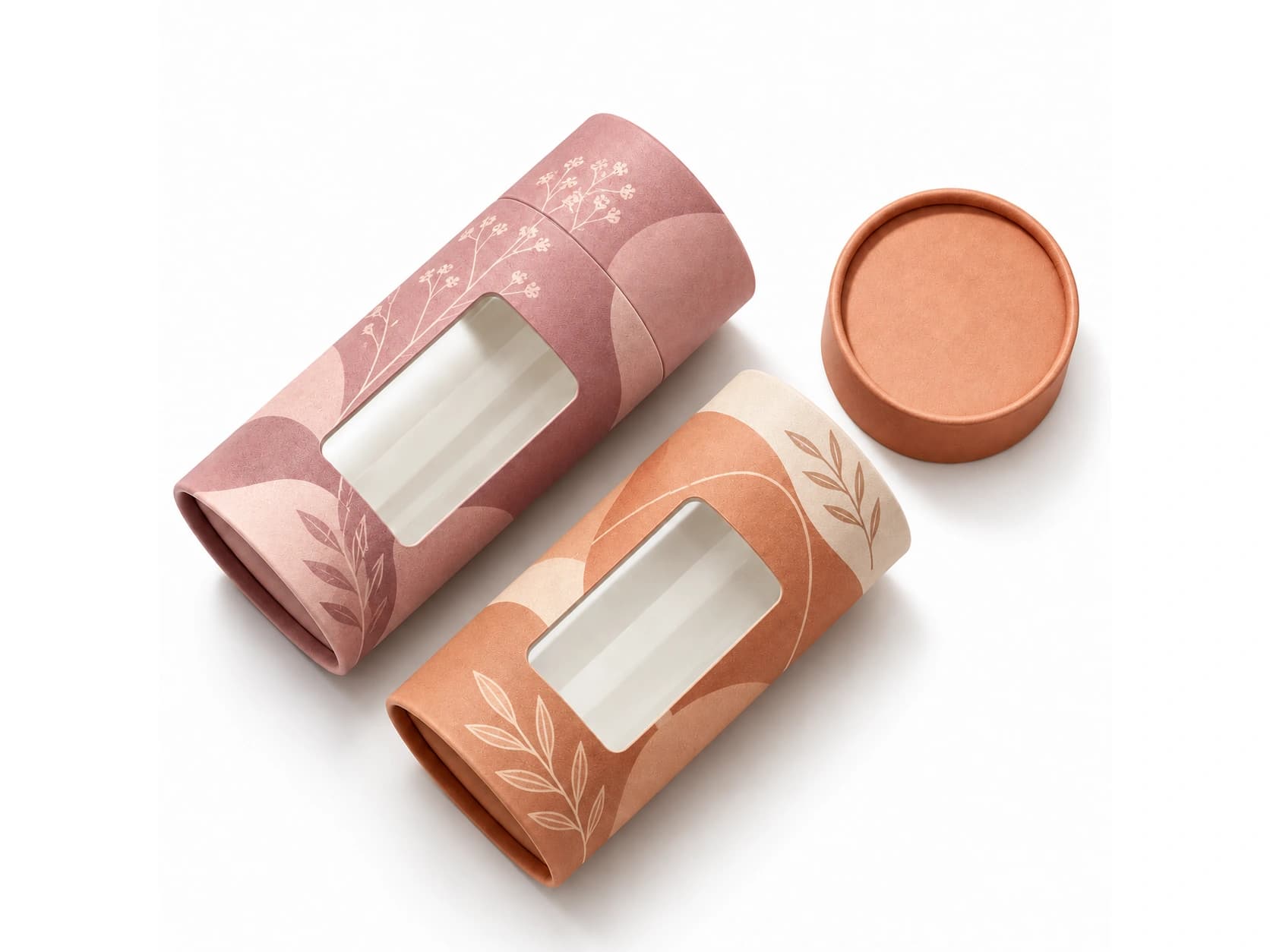
A paper tube with a die-cut window backed by clear PET film, allowing the product to remain visible while retaining the rigid cylindrical form of the package.
Even with the same box structure, paper, colour, printing method and finishing can significantly change the final result.
We help evaluate the most suitable combination based on the design intent, material compatibility, packaging structure, production quantity and budget — rather than selecting a finishing process in isolation.
Foil stamping, embossing, debossing, Spot UV, Digital 3D Foil, 3D UV and specialty papers all need to be considered together with the actual material and structure to confirm the expected result and production feasibility.
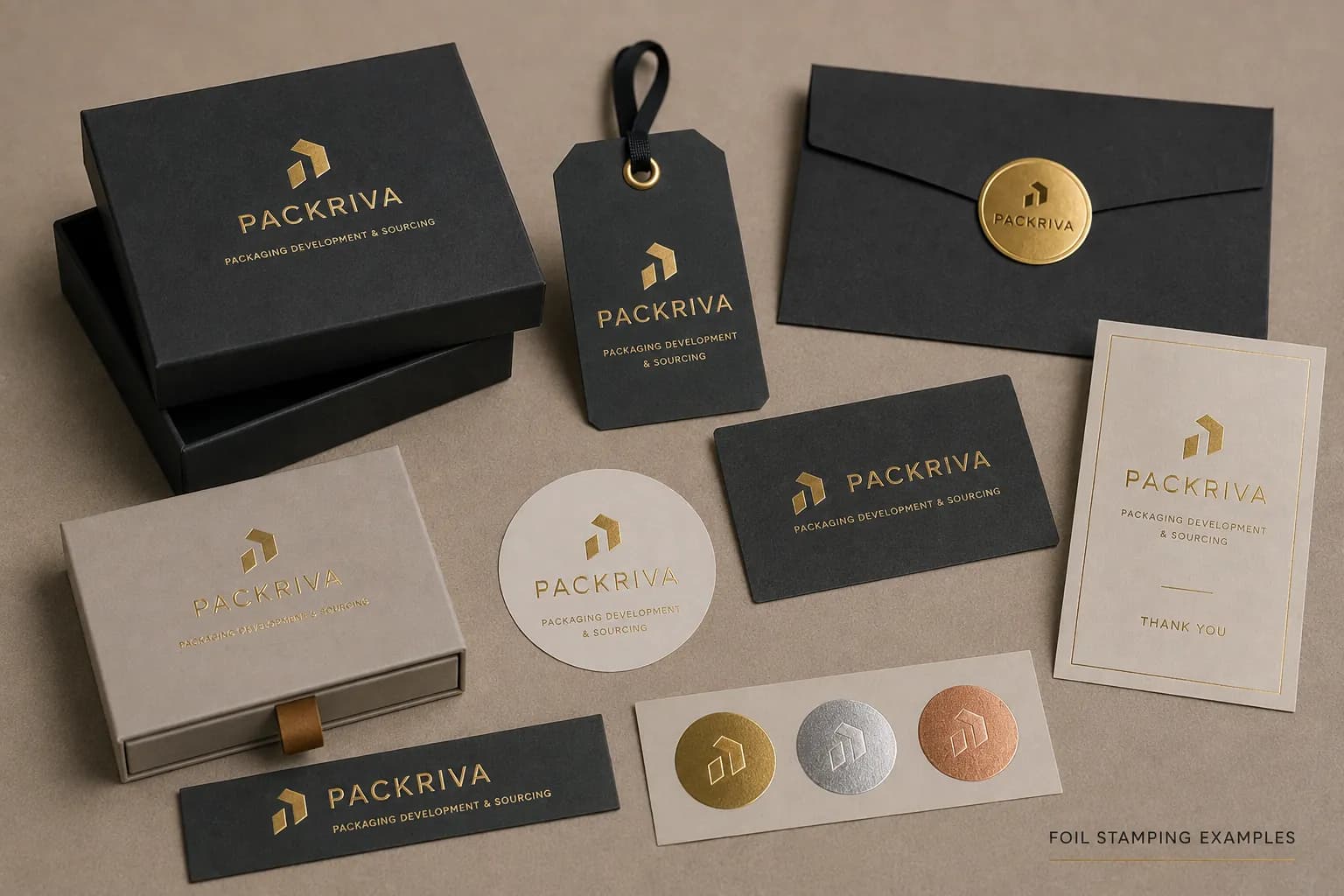
Use metallic contrast to draw attention to selected artwork details, such as a logo or border.
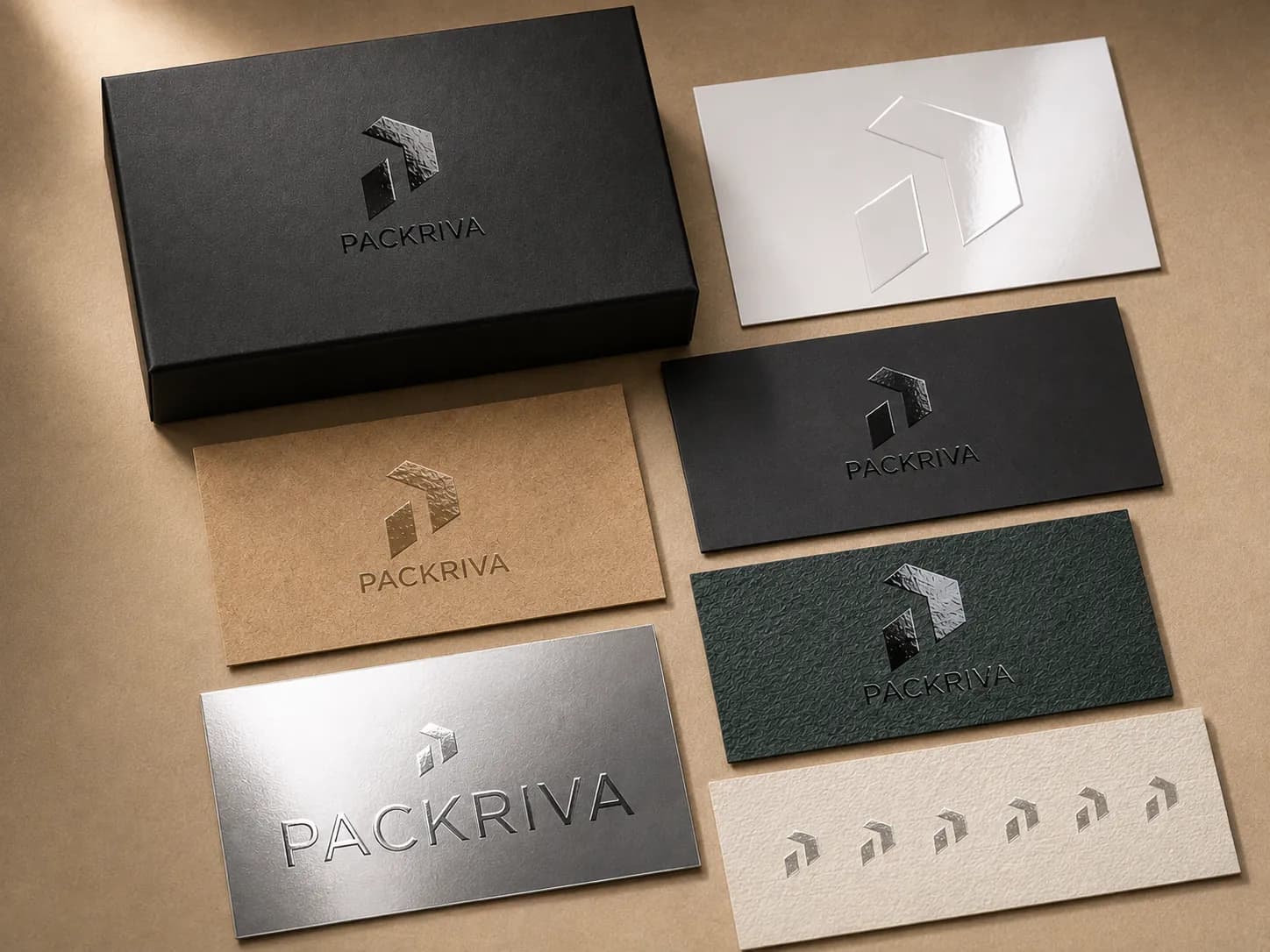
Add selective gloss to create contrast against a matte surface.
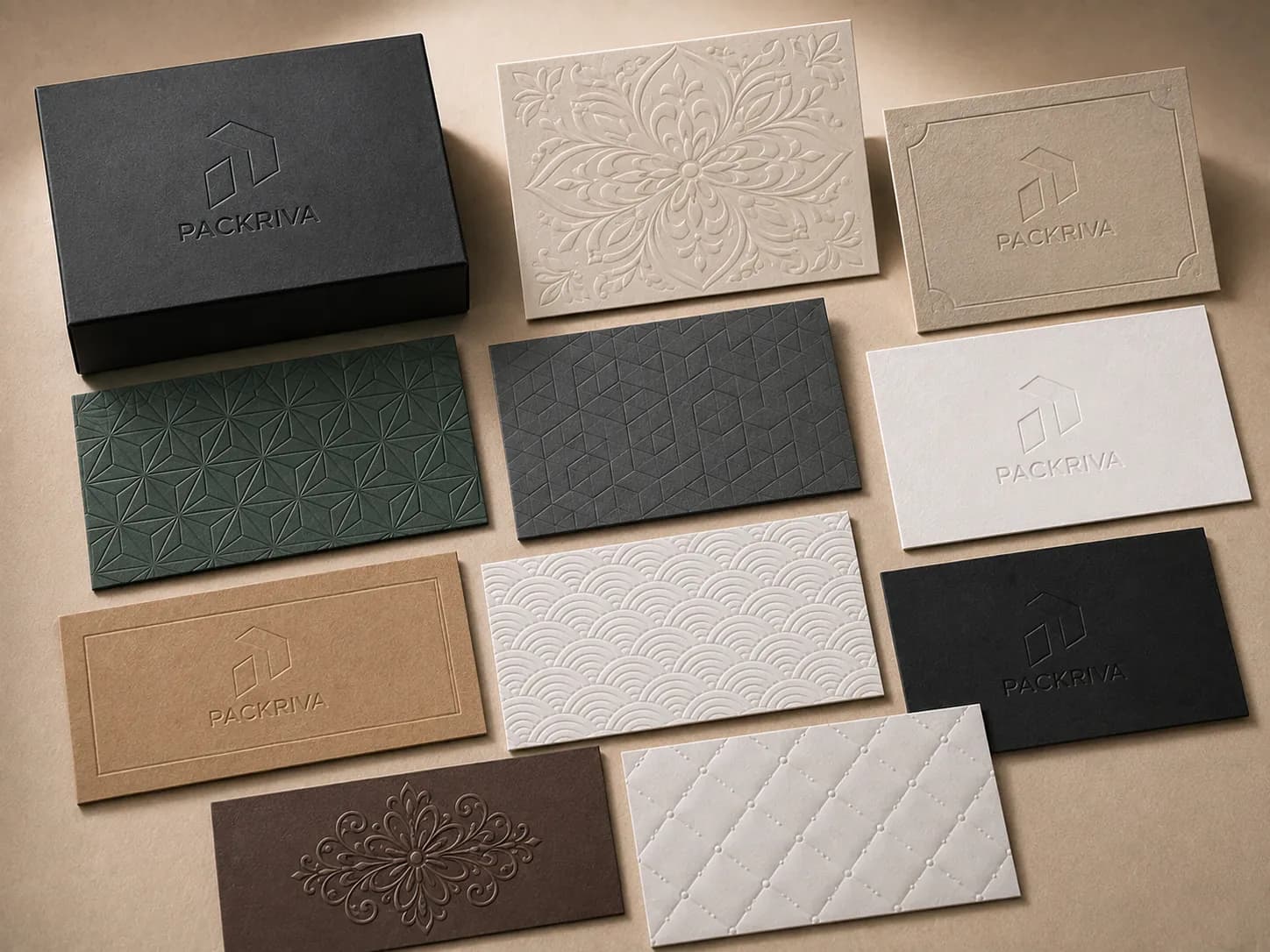
Add raised detail that can be seen and felt on paper or board.
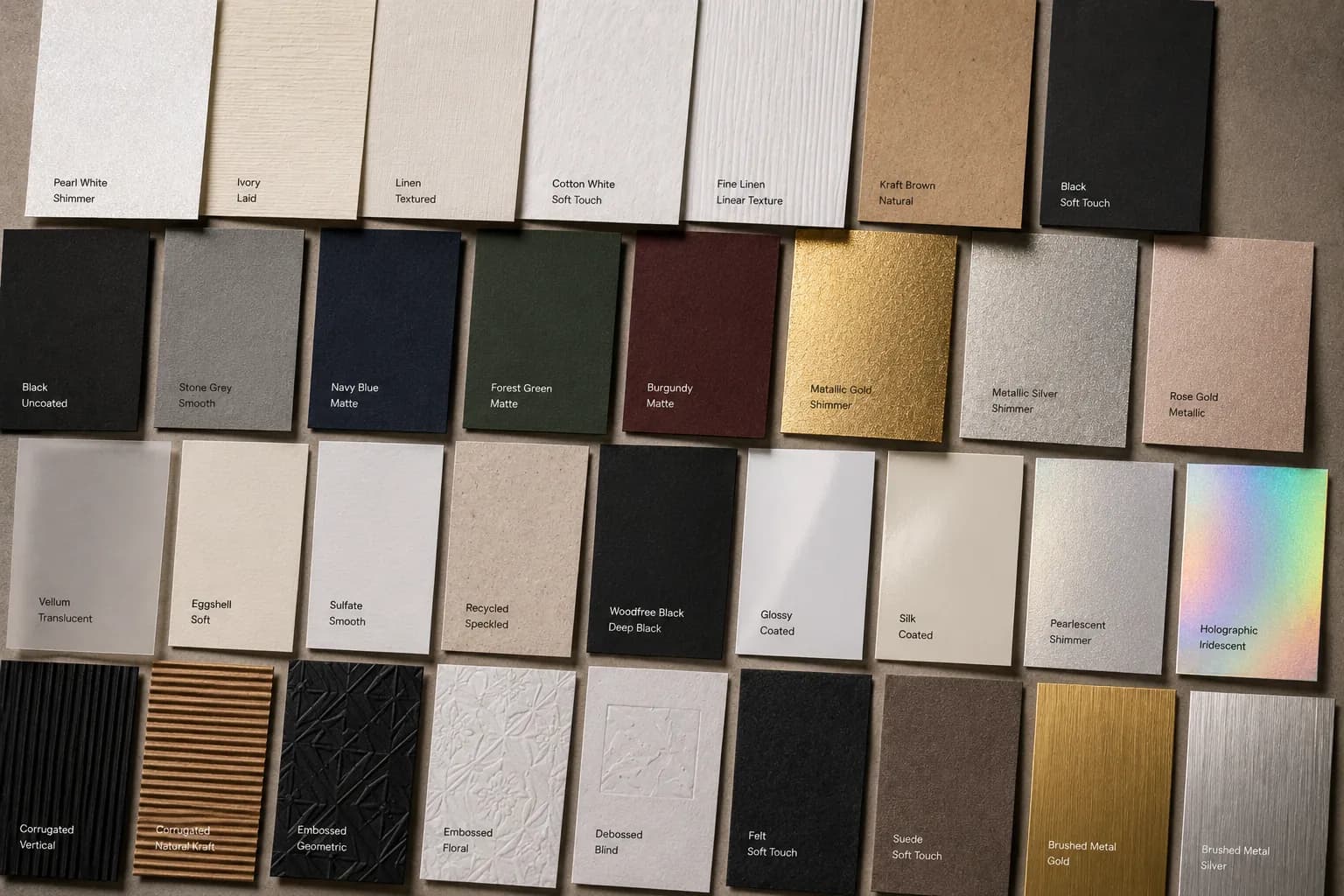
Compare paper colour and surface texture as part of the packaging material choice.
You do not need a complete packaging specification to get started. An existing product, reference images, estimated quantity, dimensions, desired appearance and delivery requirements are usually enough to begin the discussion.
PACKRIVA helps clarify the decisions that affect quotation, sampling and production, including:
Before mass production, the project should have a clear approved baseline, such as:
If materials, structure, colour, finishing or other key specifications change after approval, the affected scope should be reviewed and approved again so production does not proceed against conflicting versions.
Start Your Packaging Project
Even if the packaging specification is not yet complete, send us what you already have.
We can first clarify the structure, materials, quantity, finishing and delivery requirements before moving into quotation, sampling and production preparation.